Are Flexible Solar Panels Worth It in Ireland? (2026 Guide)
Quick answer: Yes, flexible solar panels are worth it in Ireland if you want solar on a campervan, caravan, boat or any curved or weak roof that can’t take a heavy glass panel. They’re light, thin and simple to fit. They aren’t the right choice for a house roof: for that, standard rigid panels last longer and qualify for the SEAI grant.
What is a flexible solar panel?
A flexible solar panel uses the same kind of silicon cells as a normal panel, but without the glass front and aluminium frame. The cells are laminated between thin plastic layers, so the panel is only a few millimetres thick and can bend to follow a curved surface. Most are glued, taped or screwed straight onto the roof, with no rails or brackets.
Are flexible solar panels worth it? Yes, for the right job
Here’s why flexible panels make sense for a lot of Irish buyers:
- Very light. A 100W flexible panel weighs around 2kg, compared with roughly 6–7kg for a rigid glass panel of the same size. That matters on a van or caravan roof.
- Fits curved roofs. Campervans, motorhomes, boats and some sheds have roofs that a flat glass panel simply can’t sit on.
- Low profile. They sit almost flush with the roof, so there’s less wind noise and drag on the motorway, and nothing for an Atlantic gale to catch.
- No drilling needed. Many can be bonded in place, which keeps a van or boat roof watertight.
- Easy to move. Some people use them on a balcony, a tent or a shed roof and take them down for the winter.
The downsides to know about
- Shorter lifespan. Without glass protecting them, flexible panels typically last years rather than decades. Expect less than a rigid panel’s 25-plus years.
- Heat. Glued flat to a roof, there’s no air gap to cool them, and solar panels lose output as they get hot. In Ireland’s mild climate this is less of a problem than in Spain, but it still shortens their life.
- Don’t over-bend them. “Flexible” means a gentle curve. Folding or sharp bends crack the cells.
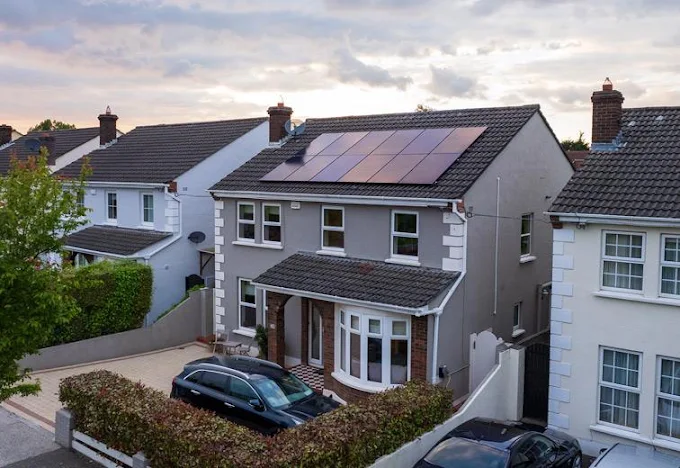
- Not for house roofs. The SEAI solar grant only covers fixed systems fitted by a registered installer, and flexible panels aren’t what installers use on homes. See rooftop solar for homes and SEAI grants instead.
Flexible vs rigid vs foldable solar panels
| Flexible | Rigid (glass) | Foldable | |
|---|---|---|---|
| Weight per 100W | About 2kg | About 6–7kg | About 3–5kg |
| Fits curved roofs | Yes | No | No |
| Lifespan | Shorter | 25+ years | Medium |
| Fitted permanently | Usually | Yes | No, you set it out in the sun |
| Best for | Campervans, boats, curved roofs | Houses, farms, businesses | Camping, power cuts, balconies |
If you’d rather carry a panel than fix one on, read our guide to foldable solar panels in Ireland.
How much power will a flexible panel make in Ireland?
As a rough guide, a 100W flexible panel lying flat on a van roof might give 250–400Wh on a good Irish summer day and well under 100Wh on a dull winter day. Flat panels catch less low winter sun than tilted ones, so expect a big seasonal swing. That’s enough to keep a leisure battery or power station topped up for lights, phones, a laptop and a 12V fridge through the touring season. Our guide to how solar panels perform in an Irish winter explains why output drops so much in December.
Our pick: BLUETTI PV100 FX flexible solar panel
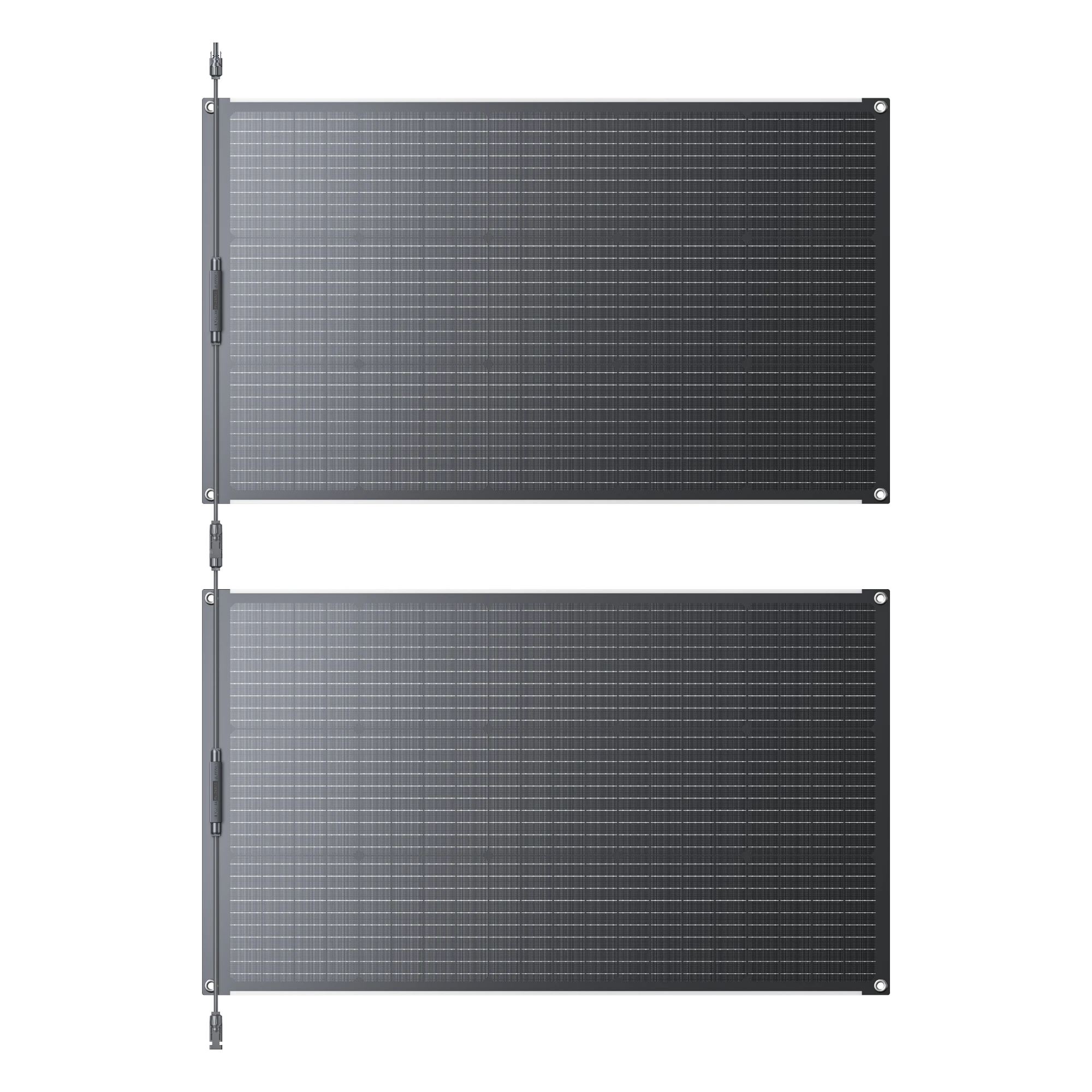
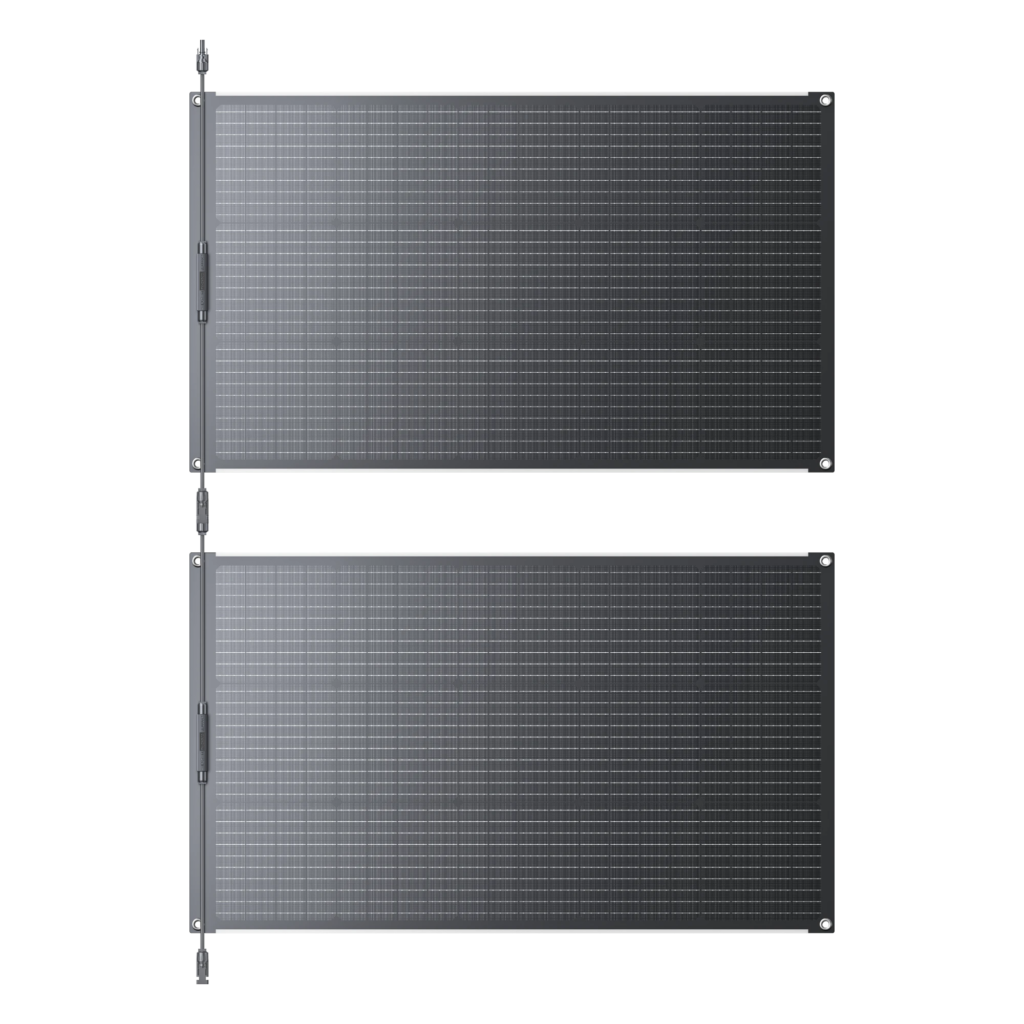
The BLUETTI PV100 FX flexible solar panel comes as a pair of 100W panels. Each weighs just 2.2kg, uses cells with 23.4% conversion efficiency, and has durable HPC lamination for wet weather. It bends to fit curved RV, campervan and boat roofs, and pairs naturally with a BLUETTI power station. It’s sold in sets of two, four or six panels, from about €259 for the 200W pair on BLUETTI’s EU store (November 2026).
Tips for fitting flexible solar panels
- Clean and dry the roof first, and use an adhesive or mounting tape made for solar panels.
- If you can, leave a small air gap or use a mounting kit, so the panel stays cooler and lasts longer.
- Route the cable through a proper waterproof roof gland.
- Check your power station or charge controller’s solar input limits before linking several panels.
- For boats and caravans that sit out over winter, check the panel and cable entry each spring.
Not sure what you need? Contact Irish Wind & Solar or call 083 480 0023. For farms and bigger off-grid jobs, see our farm solar panels page.
Frequently asked questions
Are flexible solar panels worth it?
Yes, for campervans, caravans, boats and curved or lightweight roofs, where a heavy glass panel won’t fit. For a house roof, rigid panels are better value over their lifetime.
How long do flexible solar panels last?
Typically a good deal less than rigid glass panels, which last 25 years or more. Keeping them cool and avoiding sharp bends helps them last longer.
Can I put flexible solar panels on my house roof?
It’s not recommended. House systems in Ireland use rigid panels fitted by an SEAI-registered installer, which also lets you claim the SEAI grant.
Do flexible solar panels work in Irish weather?
Yes. They work on cloudy days at reduced output, and Ireland’s cool temperatures actually help solar panels run efficiently. Output is lowest in December and January.
Can I walk on a flexible solar panel?
Avoid it. Standing on a panel can crack the cells even if the surface looks fine.