Do Solar Panels Work in Winter in Ireland? What to Expect Through the Year
It is one of the first questions we get on every site visit, usually asked while looking up at a grey October sky: do solar panels actually do anything in an Irish winter? The honest answer is yes, but a lot less than in summer. Knowing roughly how much less is what lets you judge whether solar makes sense for your home, and how to get the most from it all year round.
This guide walks through what a typical home system produces across the seasons, why winter output drops, and what you can realistically expect your panels to run between November and February.
How much does a home solar system produce in a year?
SEAI’s own guidance is a good starting point. Its Solar PV FAQ says a well-located 3 kW home system will generate around 2,600 kWh a year. That works out at roughly 850 to 900 kWh for every kilowatt-peak (kWp) of panels, which matches what we see on well-placed south-facing roofs around Waterford and the wider south-east.
Most homes we fit today have between 4 and 6 kWp on the roof, so a ballpark annual figure is somewhere in the region of 3,400 to 5,200 kWh on a good roof. Shading, roof direction and pitch can push that down, which is why we always model your actual roof rather than quoting a national average.
Free survey, grant check and a clear price with the grant already taken off.Check my savings
The seasonal split: where the energy really comes from
This is the part that surprises people. According to SEAI, around 75% of a solar PV system’s annual energy is produced between May and September. That leaves roughly a quarter spread across the other seven months, with December and January the weakest by some distance.
Using SEAI’s figures for a 4 kWp system on a good south-facing roof, the year breaks down roughly like this:
| Period | Share of annual output | Approximate output, 4 kWp system | What it typically covers |
|---|---|---|---|
| May to September | About 75% | Roughly 2,600 kWh | Much of the daytime base load, often with surplus to export or store |
| March, April and October | A large slice of the remaining 25% | Highest of the off-season months | Fridge, freezer, router and some appliance use on brighter days |
| November to February | The smallest share | The lowest output of the year | Background load on bright days; very little on dull ones |
Those are estimates based on SEAI’s published split, not guarantees. Your own month-by-month figures will depend on location, orientation and shading. For a free, independent estimate for your exact address, the EU’s PVGIS tool will show a monthly bar chart for any roof direction and pitch.
Why winter output falls so sharply
It is not the cold. Solar panels actually work slightly more efficiently at low temperatures. The drop comes down to three things:
- Short days. In late December, Ireland gets well under eight hours of daylight, compared with more than sixteen in June.
- Low sun angle. The winter sun sits low in the southern sky, so light passes through more atmosphere and strikes the panels at a shallow angle.
- Cloud cover. SEAI notes that on overcast days panels produce only a fraction of their rated output. Irish winters bring plenty of those.
Low sun also means shading matters more. A tree, chimney or neighbouring gable that causes no trouble in July can cast a long shadow across the array in December. We check winter shading as part of every survey.
Is solar still worth it if winter is weak?
For most households, yes, because the case for solar is made over the whole year, not month by month. A few points worth keeping in mind:
- Every unit you use yourself is worth your full unit rate. Selectra’s October 2026 price index puts the average standard urban unit rate at about 32.5c per kWh including VAT, with suppliers ranging from roughly 29c to 42c.
- Winter units still count. Even modest winter generation that runs your fridge, freezer and electronics during the day is electricity you are not buying.
- Summer surplus earns money. Exported units are paid under the Clean Export Guarantee. Rates vary by supplier, with most paying somewhere in the region of 16c to 20c per kWh at the time of writing.
- The grant still applies. The SEAI Solar Electricity Grant continues at up to €1,800 for 2026, paid at €700 per kWp for the first 2 kWp and €200 per kWp up to 4 kWp. See our SEAI grants page for how it works.
Getting more from your panels in winter
You cannot change the weather, but you can change how you use what the panels give you.
Run appliances in the middle of the day
In winter, generation is squeezed into a few hours around noon. Timing the dishwasher or washing machine for late morning to early afternoon, on a brighter day, lets you use what little there is rather than letting it go to the grid.
Pair solar with a battery and a smart tariff
A battery helps in winter in a different way. On dull days it can be charged from the grid on a cheaper night rate, then used during the expensive evening peak. In summer it stores solar instead. Many of our customers find this all-year flexibility is where a battery earns its keep.
Keep the array clear and monitored
Check your inverter app regularly. A sudden drop that cannot be explained by the weather can point to a fault, and catching it early matters more in the months when every unit counts.
Get the design right at the start
Panel choice, string layout and avoiding winter shading all make a difference. If you are comparing brands, our solar panel reviews cover the models we fit and why.
Do solar panels work on cloudy and rainy days?
Yes. Solar panels need daylight, not direct sunshine. On a bright overcast day they still produce a useful amount, often 10 to 25% of their peak output, and modern N-type panels cope better with low light than older ones. Rain doesn’t hurt them either: it helps keep the glass clean, and Ireland’s cool temperatures actually help, because panels are more efficient when they aren’t too hot.
To get the most from solar in Ireland, face the panels south, east or west (all three work well), avoid shading from trees and chimneys, add a battery so you use more of your own power in the evening, and run heavy appliances, EV charging and hot water during the day. In more than 2,000 Irish installs, I’ve yet to see a well-designed system that didn’t produce useful power through the year.
Frequently asked questions
Do solar panels work on cloudy days?
Yes, they still generate from diffuse daylight, but output on a heavily overcast day can be a small fraction of what the same panels produce in bright sun.
Do solar panels work in frost or snow?
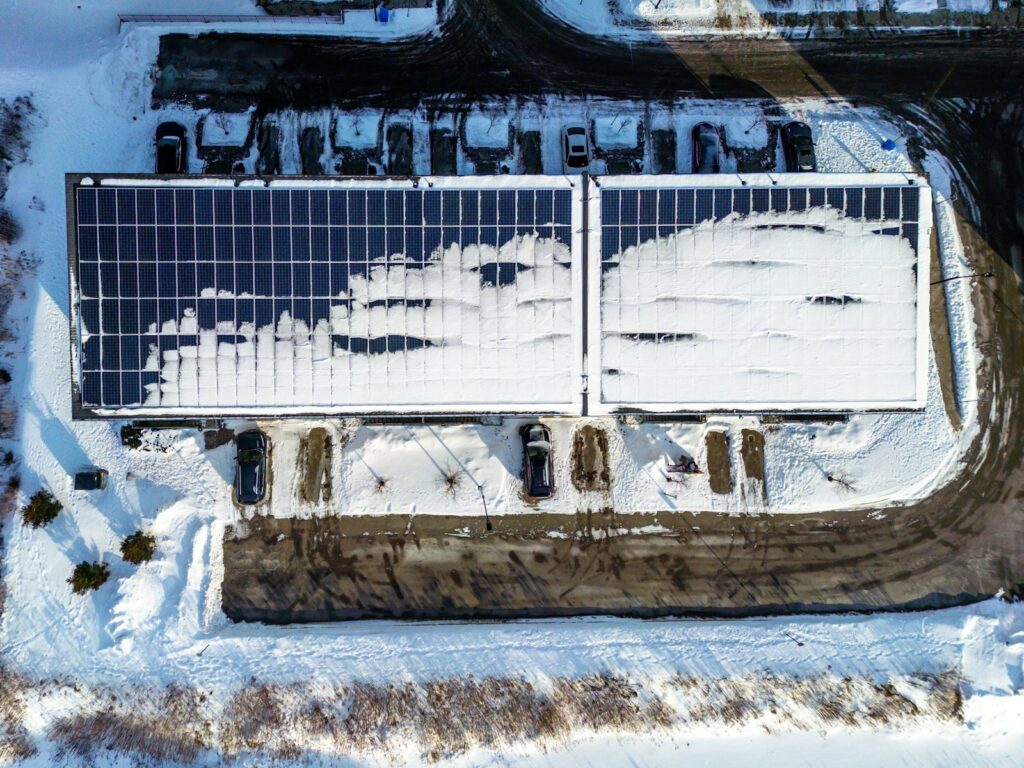
Frost and cold are not a problem. Panels perform slightly better when cool. A covering of snow will stop generation until it slides or melts off, but lasting snow is rare in most of Ireland.
Will solar cover my electricity in winter?
Not on its own. Expect panels to cover part of your daytime background load on brighter winter days, while summer is where most of the savings come from.
Should I wait until spring to install?
There is no technical reason to wait. Installing in autumn or winter means the system is commissioned, registered and ready to make full use of the spring and summer months.
Talk to us about your roof
Every roof is different, and a national average only goes so far. We are an SEAI-registered installer based in Waterford and we cover all 26 counties. Find out more about our home solar PV systems, or get in touch and we will give you a straight estimate of what your roof will produce, summer and winter.
Thinking about your own system? See our home solar and battery systems or book a free survey with our SEAI-registered team.
Related: worried about the grid this winter? Read about winter blackouts in Ireland and how to keep the lights on with BLUETTI backup power.
Local installs: solar panels Clonmel · Thurles · Nenagh · Carrick-on-Suir · all of Tipperary · Waterford
Some links in this post are affiliate links. As an Amazon Associate we earn from qualifying purchases, at no extra cost to you.