How to Survive a 72-Hour Power Cut in Ireland: A Safety Guide for Families, Babies and Vulnerable People
Quick answer: to get through a 72-hour power cut safely, every home needs water, food that needs no cooking, light, a way to stay in contact, and a plan for anyone who depends on electricity, such as babies, older people and anyone using medical equipment. The Government’s Be Emergency Ready campaign asks every household to be ready to cope for 72 hours on its own. This guide gives you the checklist, the safety rules, and how to keep the essentials powered for 3 days.
Storm Éowyn showed how quickly a normal week can turn into days without power. After the storm, 70% of electricity customers had power back within 72 hours and 90% within a week, but some homes waited 18 days. For most families that’s an inconvenience. For a new baby, an elderly parent living alone or someone on oxygen at home, it can be dangerous.
That’s why I’ve put this guide together. At Irish Wind & Solar we’ve fitted backup power in homes across Ireland, and the families who cope best are the ones who planned ahead. Here’s how to do it.
Why 72 hours?
The Government’s Be Emergency Ready booklet, delivered to around 2.2 million homes by An Post from 21 September 2026, asks every household to plan for up to 72 hours without power, water or communications. It’s part of the EU’s preparedness strategy, which asks people to be self-sufficient for at least 72 hours in an emergency. Seventy-two hours is roughly how long it can take for help and repairs to reach everyone after a major storm.
Free survey, grant check and a clear price with the grant already taken off.Check my savings
You can download the booklet and checklist at gov.ie/BeEmergencyReady.
Your 72-hour power cut checklist
| What | How much for 3 days | Tips |
|---|---|---|
| Drinking water | At least 2 litres per person per day, plus extra for washing, cooking and pets | Bottled water lasts. Add more for babies’ bottles and anyone who is ill. |
| Food | 3 days of meals that need no cooking | Tinned fish, beans, soup, fruit, crackers, cereal bars, long-life milk. Don’t forget a manual tin opener. |
| Light | Torches for each person, plus spare batteries | LED torches and lanterns are safer than candles. A head torch keeps your hands free. |
| Candles and matches | A small supply as a backup | Never leave a candle burning unattended or near children, curtains or pets. |
| Batteries | Spares in every size your torches and radio take | Check them every few months. |
| Radio | One battery or wind-up radio | RTÉ Radio 1 carries official updates when phones and internet are down. |
| Power banks | One fully charged per person | Keep them topped up all winter. |
| Medicines | At least 3 days’ supply, plus a written list | Ask your pharmacist about medicines that must be kept cold. |
| First aid kit | One per home | Include any baby or child medicines you use. |
| Warmth | Blankets, sleeping bags, warm layers, hats | Most modern heating needs electricity to run. |
| Cash | A small amount in notes | Card machines and ATMs may not work. |
| Important numbers | Written down on paper | Family, GP, pharmacy, your electricity supplier, and ESB Networks’ emergency line: 1800 372 999. |
Babies and young children
Babies are the most vulnerable people in any power cut, because so much of their care relies on warm water, clean bottles and a warm room. If you have a baby or toddler at home:
- Keep extra drinking water just for bottles, on top of the household’s supply.
- Keep a few cartons of ready-to-feed formula in the press. They need no boiled water or measuring, which makes them the simplest backup when you can’t use the kettle.
- Have a backup way to sterilise bottles. Cold-water sterilising tablets work without power. An electric steam steriliser can run from a portable power station (see below).
- Keep the baby warm at night: layers and a sleeping bag suited to their age, never loose blankets or hot water bottles in the cot.
- Stock nappies, wipes and any medicines for at least 3 days.
- Keep a night light such as a battery LED lamp, so you’re not using candles in a child’s room.
Older people and people living alone
- Check on neighbours, especially older people living alone. A knock on the door during a storm can make a huge difference.
- Agree a plan with family: who will call, who will visit, and where they’ll go if the house gets too cold.
- Keep a phone charged and a power bank by the bed.
- Keep warm in one room: close doors, wear layers, and keep blankets handy.
Medical equipment: register before a power cut
If anyone in your home relies on electrical medical equipment, such as an oxygen concentrator, home dialysis, a feeding pump, a suction machine or a ventilator, this is the most important step in this guide.
- Register as a vulnerable customer with your electricity supplier. You can’t register directly with ESB Networks; your supplier passes your details on to them. Registered customers get priority 24/7 support on ESB Networks’ emergency number, 1800 372 999, and advance notice of planned outages affecting their home.
- Know that ESB Networks can’t keep your home on. In a controlled outage, power is cut remotely and it isn’t possible to isolate individual homes. Registration means support and warnings, not guaranteed power.
- Talk to your medical team or equipment supplier about a backup plan, such as backup oxygen cylinders, and how long any built-in batteries last.
- Have backup power, keep it charged, and check with your equipment supplier that your device can be safely run from it.
Staying in contact and keeping power on: why it matters
In a long power cut, the two things that matter most are staying in contact (calling for help, getting updates, checking on family) and keeping the essentials powered: light, a cold fridge for food and medicines, warm water for a baby’s bottle, and any medical equipment.
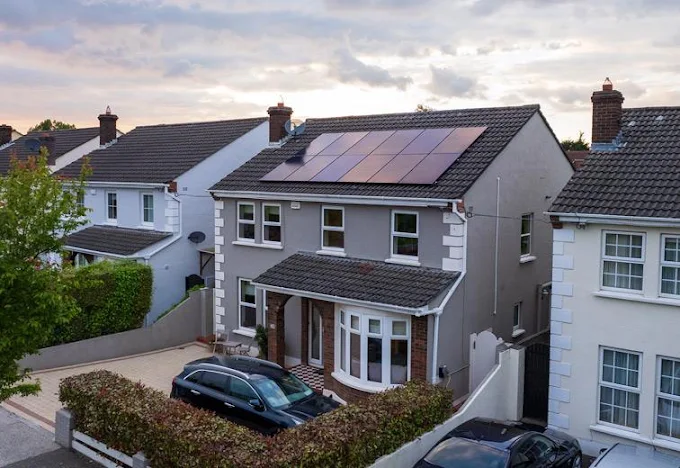
If your home has solar with a battery and backup gateway, you’re well covered: read will your solar battery work in a power cut? to check yours is set up for it. A standard solar battery won’t run your house in a power cut without the right backup switching.
If you don’t have solar, a portable power station is the simplest answer. It needs no installation, runs silently and safely indoors (unlike a petrol generator), and you just plug your appliances into it.
Can a BLUETTI Elite 300 keep a home going for 3 days?
The BLUETTI Elite 300 is our recommended product for families who want proper backup without installing anything. It stores about 3 kWh (3,014 Wh), delivers 2,400 W continuous through standard 230 V sockets, switches over in about 10 milliseconds if the power drops, and uses long-life LiFePO4 cells rated for 6,000+ cycles.
Here’s roughly what the essentials use in a day (estimates; check your own appliances’ labels):
| Appliance | Typical use | Energy per day |
|---|---|---|
| LED lights (4 bulbs) | 6 hours | about 0.2 kWh |
| Wi-Fi router | 24 hours | about 0.2 kWh |
| Phones and a tablet | Full charges for the family | about 0.1 kWh |
| Fridge (modern) | 24 hours | about 0.5 to 1 kWh |
| TV | 3 hours | about 0.2 kWh |
| Kettle (up to 2,200 W) | 4 boils for tea and bottles | about 0.3 kWh |
| Electric bottle steriliser | 2 cycles | about 0.1 kWh |
| Total | about 1.6 to 2.1 kWh |
What that means: on a full charge, the Elite 300 can run all of that for a full day with power to spare. To stretch it across 3 days, use it sensibly: keep the fridge door shut and run it in blocks rather than all day, keep the TV for the evening, and top it up with a solar panel during daylight.
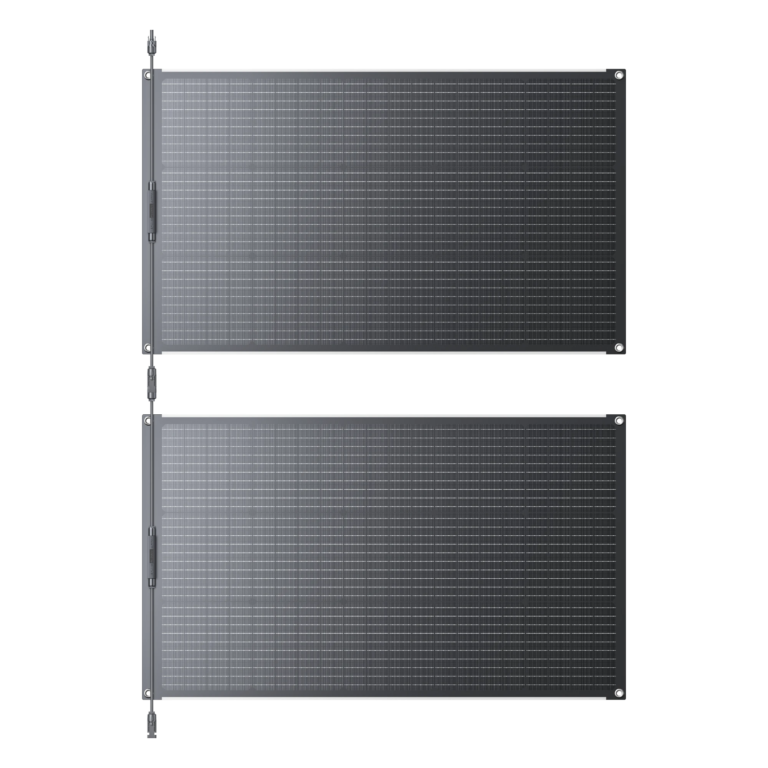
It charges back up in daylight. The Elite 300 takes up to 1,200 W of solar input, enough to refill it in about four hours in strong sun with enough panels. Even on a dull Irish winter day, a foldable solar panel adds a useful top-up, so you can keep going for as long as the outage lasts.
A note on kettles: many Irish kettles are rated at 3,000 W, which is more than the Elite 300’s 2,400 W output. Use a kettle of 2,200 W or less, or a small travel kettle.
Medical devices: a power station can keep critical equipment running through a power cut, which for some people is what matters most. How long depends on the device: a CPAP machine uses little power and could run for several nights, while an oxygen concentrator drawing around 300 W would run for roughly 8 hours on a full charge, so you’d need solar top-ups and your supplier’s backup plan too. Always check with your equipment supplier before relying on it.
Discounted BLUETTI systems through Irish Wind & Solar: we can supply BLUETTI power stations and solar panel bundles at a discounted rate, and help you pick the right size for your home, your baby or your medical equipment. Call us on 083 480 0023 or use the quote form on this page. You can also see the Elite 300 here.
Power cut safety rules
- Never use a petrol or diesel generator, barbecue, camping stove or patio heater indoors or in a garage. They produce carbon monoxide, which can kill. Make sure you have a working carbon monoxide alarm.
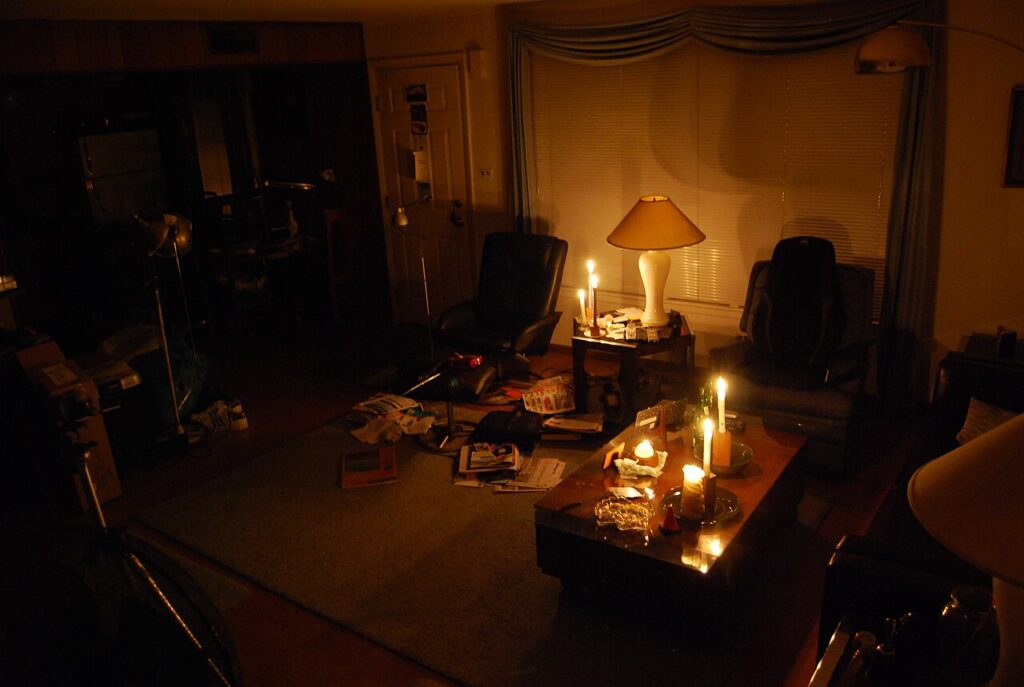
- Use torches and LED lanterns instead of candles where you can. If you do use candles, keep them in sturdy holders, away from children and curtains, and never leave them burning.
- Keep the fridge and freezer closed. A closed fridge stays cold for about 4 hours, and a full freezer for up to about 48 hours.
- Switch off appliances that were on when the power went, but leave one light switched on so you know when power is back.
- Stay away from fallen power lines. Report them to ESB Networks on 1800 372 999.
- Check on vulnerable neighbours if it’s safe to do so.
Where to get updates during a power cut
- ESB Networks’ powercheck.ie for faults and expected restoration times in your area.
- Met Éireann for weather warnings.
- Local radio and RTÉ Radio 1, which keep broadcasting when the internet goes down.
- Our guide to blackout warnings and EirGrid alerts explains what the different grid warnings mean.
Frequently asked questions
How do I survive a 72-hour power cut?
Have 3 days of drinking water and food that needs no cooking, torches and spare batteries, a battery radio, charged power banks, medicines, warm layers and a little cash. If anyone depends on electricity for health or a baby’s care, add backup power and register with your electricity supplier as a vulnerable customer.
How much water do I need for 3 days?
Plan for at least 2 litres of drinking water per person per day, so 6 litres each for 3 days, plus extra for washing, cooking, pets and babies’ bottles.
How do I make a baby’s bottle in a power cut?
Ready-to-feed formula cartons are the easiest backup, as they need no boiled water. If you need to boil water or use an electric steriliser, a portable power station can run a kettle of up to 2,200 W and most sterilisers.
What happens to medical equipment in a power cut?
It stops unless it has a battery or backup power. Register with your electricity supplier so ESB Networks can give you priority support and warnings, talk to your equipment supplier about a backup plan, and keep a charged power station ready.
Can I run a fridge on a portable power station?
Yes. A modern fridge uses about 0.5 to 1 kWh a day, so a 3 kWh station like the BLUETTI Elite 300 can run one for a few days, especially if you keep the door shut and top up with solar.
Is a power station safe to use indoors?
Yes. Unlike a petrol generator, a battery power station gives off no fumes, so it can be used safely inside your home.
Be ready before the next storm
From a BLUETTI power station to whole-house battery backup, we’ll help you protect your family. Call 083 480 0023 for discounted BLUETTI systems and free advice.
Sources: Government of Ireland, Be Emergency Ready campaign (Office of Emergency Planning); ESB Networks vulnerable customer policy; Irish Times reporting on the Storm Éowyn review; BLUETTI Elite 300 specifications. Appliance energy figures are typical estimates. This guide is general advice: anyone relying on medical equipment should follow their clinical team’s plan. Updated November 2026.
Some links in this post are affiliate links, so we may earn a commission at no extra cost to you.