How to Choose the Right Solar Panels for Your Home.
Choosing solar panels for your home in Ireland isn’t just about price. It’s about long-term performance, the right panel for your roof, a properly sized system, a good installer and aftercare. After more than 2,000 installs, this is the checklist I’d give a friend.
1. Start with the installer, not the panel
The biggest mistake homeowners make is focusing only on the panel brand. A good installer decides how well the system is designed, where the panels go, how the inverter is sized, how it performs for 25 years, and whether you get your grant.
- SEAI-registered: essential. Without it you can’t claim the SEAI solar grant.
- Experience: look for several years in solar PV, real local references and both domestic and commercial work.
- A site visit before the quote: good installers always inspect your roof first.
2. Which type of solar panel is best for Irish homes?
Panels look alike, but the cell technology inside makes a real difference to output, looks and lifespan.
- Monocrystalline: the standard today. Almost every home panel sold in Ireland is mono; the older blue polycrystalline panels are rarely fitted now.
- N-type TOPCon: most new premium panels. Better in low light and heat, and they lose less output over the years, which suits Irish weather. See our Jinko 455W and TCL 445W reviews.
- Back-contact (ABC/HPBC): wiring moved to the back of the cell for a cleaner look and more power per panel. Ideal for small or partly shaded roofs. See our AIKO Neostar review.
- Bifacial: collect light from both sides, so they suit ground mounts, flat roofs and solar carports.
- All-black: black backsheet and frame for a neater look; output is very slightly lower than the same panel with a white backsheet.
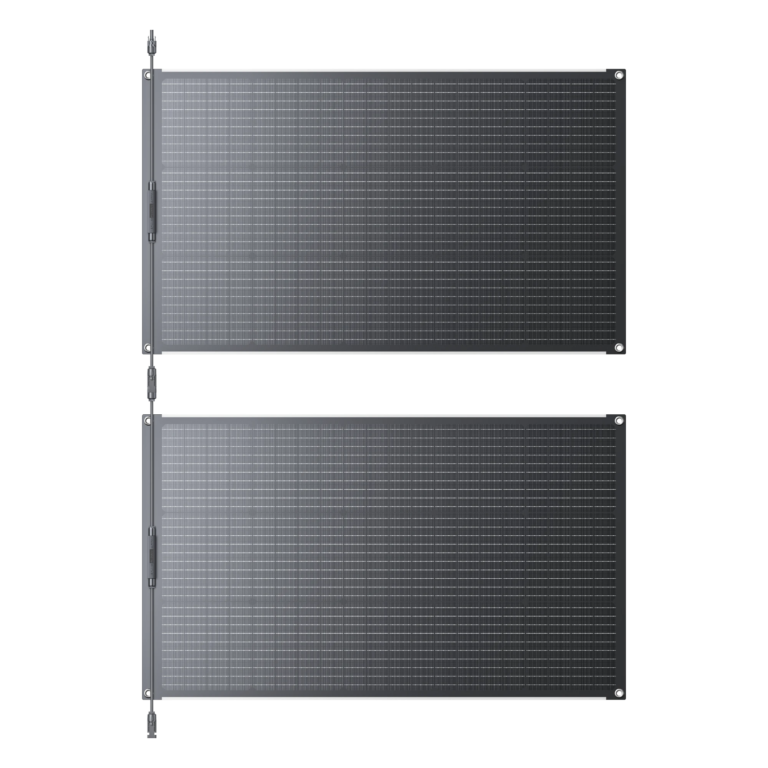
- Flexible: thin, light and bendable, but less efficient and shorter-lived (often 5 to 10 years of good output). They run hotter stuck flat to a surface and don’t qualify for the SEAI home grant, so keep them for vans, boats and caravans, not house roofs.
| Your situation | Best choice |
|---|---|
| Typical roof, best value | Mono N-type TOPCon |
| Small or partly shaded roof | Back-contact |
| Looks matter most | All-black |
| Ground mount, flat roof or carport | Bifacial |
| Van, boat or caravan | Flexible |
For most Irish homes I recommend a modern monocrystalline panel in the 430W to 500W range: the best output per square metre and good on dull days.
Free survey, grant check and a clear price with the grant already taken off.Check my savings
3. What actually matters on the spec sheet
- Efficiency: higher efficiency means more power from the same roof. Modern panels are roughly 20% to 23%.
- Degradation: good panels lose only about 0.3% to 0.5% of output a year.
- Warranties: look for a 12 to 25 year product warranty and a 25 to 30 year performance warranty. The warranty tells you more than the marketing.
4. How many solar panels do I need?
Check a full year of electricity use on your bills or supplier app. A typical Irish home uses around 4,200 kWh a year; an EV, heat pump or electric heating adds a lot more. In Ireland each 1kWp of well-placed panels produces roughly 850 to 950 kWh a year.
| Yearly use | Typical system | Panels (approx.) |
|---|---|---|
| Up to 3,000 kWh | 2.5 to 3kWp | 6 to 7 |
| 3,000 to 4,500 kWh | 3.5 to 4.5kWp | 8 to 10 |
| 4,500 to 6,500 kWh | 5 to 6kWp | 11 to 14 |
| 6,500 kWh+ (EV, heat pump) | 6 to 10kWp | 14 to 22 |
Each panel is about 1.9 to 2m², and you need to leave the edge gaps required for the planning exemption. Sizing slightly bigger often pays, especially with a battery: it covers more of spring and autumn, and you’re paid for exports. The SEAI home grant tops out at 4kWp, but you can install more.
5. Price vs value
A fair quote breaks down the panels, inverter, mounting, electrical work, labour, commissioning and monitoring, with the grant shown clearly. Be wary of vague per-panel pricing, no equipment breakdown, pressure selling or a quote given without a site visit.
6. System design matters more than the panel
A well-designed system beats a better panel badly designed. Good design looks at roof direction and shading, when you use electricity, inverter sizing and the balance between using and exporting. The goal isn’t the most panels, it’s the most usable energy. For homes that usually means planning for a battery, EV charging and future expansion; for businesses, it means designing around real daytime consumption data.
7. How long should solar last?
- Panels: 25 to 30 years
- Inverter: 10 to 15 years
- Battery: 8 to 15 years
8. Commissioning, handover and aftercare
A proper handover includes full system testing, inverter set-up, the monitoring app, an explanation of expected output and safety certification. After that, a good installer provides monitoring support, fault diagnosis and warranty handling. Without aftercare, a system can underperform for years without you noticing.
9. Grants and paperwork
For SEAI grant compliance you need an SEAI-registered installer, approval before any work starts, a post-works BER and the right documentation. Most homes can get up to €1,800 for panels plus €600 for a battery, and households on certain social welfare payments can get up to €9,000.
Frequently asked questions
What is the best type of solar panel for Ireland?
For most homes, a monocrystalline N-type TOPCon panel of 430W to 500W. Back-contact panels are worth the extra on small or shaded roofs.
How many solar panels does a 3-bed house in Ireland need?
Usually 8 to 10 modern panels (about 3.5 to 4.5kWp) for typical use of 3,000 to 4,500 kWh a year. More if you have an EV or heat pump.
Are flexible solar panels good for a house?
No. They’re less efficient, shorter-lived and don’t qualify for the SEAI grant. Rigid panels are far better value on a roof.
Want a system designed properly for your roof? Irish Wind & Solar gives you a free survey and a fixed quote with the grant already taken off. Book your free survey or call 083 480 0023. Compare every panel, inverter and battery we’ve tested in our reviews.
Related: live in a flat? Read our guide to solar for flats and apartments.
Local installs: solar panels Clonmel · Thurles · Nenagh · Carrick-on-Suir · all of Tipperary · Waterford