East-West vs South-Facing Roofs: Is Solar Worth It on Your Irish Home?
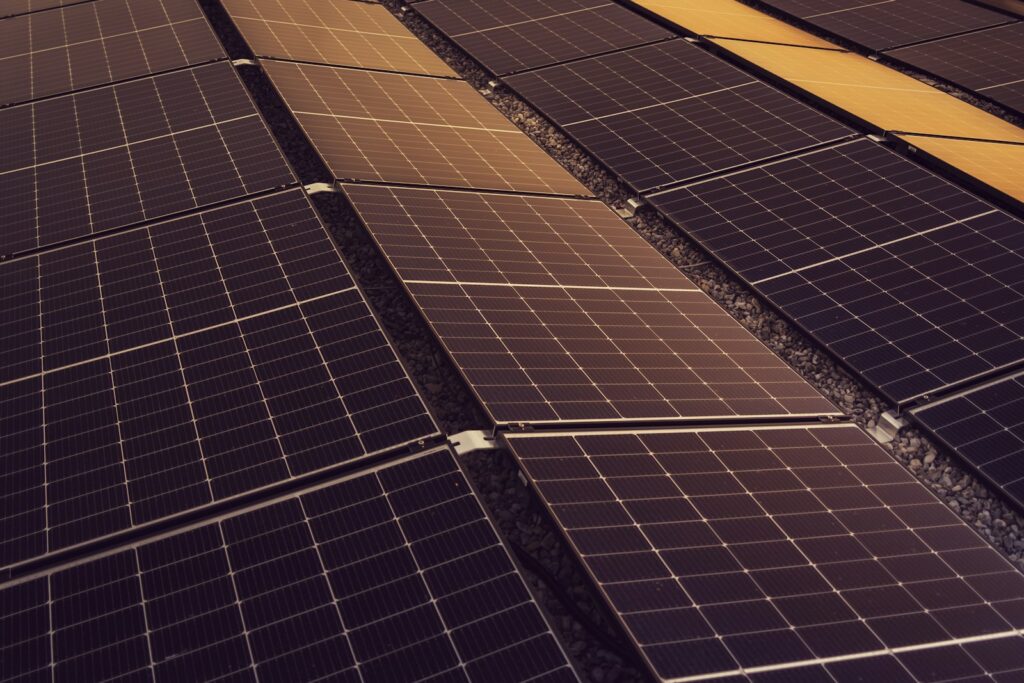
If your roof faces east and west rather than south, you have probably wondered whether solar is worth the bother. Plenty of Irish homes are built that way, especially in newer estates, and we hear the same worry on surveys every week. The short answer is that east-west roofs can work very well. They just behave differently from a south-facing roof, and it pays to understand how before you commit.
💡 Grant update: east-west or south-facing, the SEAI grant is the same: up to €1,800, plus €600 for a battery. See our SEAI Solar Grant 2026 guide.
Why south-facing roofs are the benchmark
In Ireland the sun sits in the southern half of the sky for most of the day, so a south-facing roof at a pitch of roughly 30 to 40 degrees catches the most energy over a full year. SEAI’s Solar PV FAQ confirms that an east- or west-facing system will generate less energy over the year than a south-facing one.
A well-located south-facing home system typically produces somewhere around 850 to 900 kWh per kWp per year, based on SEAI’s example of a 3 kW system generating around 2,600 kWh.
Free survey, grant check and a clear price with the grant already taken off.Check my savings
How much less does east or west produce?
The gap depends on pitch and location, but independent modelling gives a useful guide. Analysis published by iHeat using the EU’s PVGIS tool, for a 4 kWp system at a 40-degree pitch in southern Britain, came out like this:
| Roof direction | Annual output compared with due south |
|---|---|
| South | 100% |
| South-east | About 95% |
| South-west | About 92% |
| East | About 79% |
| West | About 76% |
| North (40-degree pitch) | About 49% |
Ireland sits at a similar latitude, so the pattern is broadly similar here, although the exact numbers for your house will differ. Two things stand out. South-east and south-west roofs lose very little. And a pure east or west face typically gives somewhere around three-quarters to four-fifths of the output of the same panels facing south.
Lower pitches narrow the gap, because flatter panels see more of the sky whichever way they face. You can check your own address and roof angle for free on PVGIS.
Why east-west can still be a smart choice
Total kilowatt-hours are only half the story. What matters for your bill is how much of that energy you use yourself, because every unit you avoid buying is worth your full unit rate. Selectra’s October 2026 index puts the average at about 32.5c per kWh, while exported units under the Clean Export Guarantee are typically paid somewhere in the region of 16c to 20c, depending on supplier.
That gap is where east-west earns its place:
- A longer, flatter generation curve. East panels pick up the morning sun and west panels the late afternoon and evening, rather than a sharp midday peak.
- Better match with family routines. Breakfast, school runs and the evening dinner rush line up better with morning and evening generation.
- Less wasted surplus. A smaller midday spike means less energy exported at the lower rate, and less clipping on a modest inverter.
- Two roof faces, more panels. Using both slopes often fits more panels than one south face, which can close much of the output gap.
East-west or south: a quick comparison
| Factor | South-facing | East-west split |
|---|---|---|
| Annual output per panel | Highest | Lower, typically around 75% to 80% for a pure east or west face |
| Generation pattern | Strong midday peak | Spread over morning and evening |
| Self-consumption without a battery | Lower, more export | Often higher |
| Roof space | One slope | Two slopes, often more panels |
| Inverter design | Single orientation | Needs separate strings or optimisers for each face |
Design points we always check
Separate strings for each face
Panels facing different directions peak at different times. Wiring them on the same string drags the whole string down. We put each face on its own MPPT input, or use optimisers where the layout calls for it.
Sizing the inverter
Because the two faces rarely peak together, an east-west array can often be paired with a slightly smaller inverter than its total panel rating without losing much energy. This needs to be calculated, not guessed, and it must still meet ESB Networks connection rules.
Shading from the ridge and neighbours
Low morning and evening sun means east and west faces are more sensitive to shading from chimneys, trees and neighbouring houses. A proper survey looks at the sun path across the whole year.
Grant eligibility is the same
Orientation does not affect the SEAI Solar Electricity Grant. In 2026 it remains up to €1,800, at €700 per kWp for the first 2 kWp and €200 per kWp up to 4 kWp. Our SEAI grants guide explains the process.
What about a north-facing roof?
A steep north-facing roof is usually a poor fit for panels. If that is all you have, there are often alternatives, such as a garage, outbuilding or a ground mount. Our solar carports are another option where a driveway catches good sun.
Frequently asked questions
Is an east-west roof worth putting solar on?
In most cases, yes. You will generate less per panel than on a south roof, but you can often fit more panels and use more of the energy yourself, which is where the savings are.
Is east or west better if I can only use one side?
It depends on your routine. West tends to suit households who are out during the day and home in the evening. East suits early risers and homes with a morning load. Output over the year is usually similar.
Do I need a battery with east-west panels?
Not necessarily. The spread-out generation already helps self-consumption. A battery can still add value, especially if you also use a cheaper night rate.
Will my installer charge more for two roof faces?
There can be extra scaffolding, cabling and inverter inputs, so it is worth asking for an itemised quote. The cost difference is usually modest compared with the overall system price.
Find out what your roof can do
We are an SEAI-registered solar and wind installer based in Waterford, working in all 26 counties. Have a look at our residential solar PV options, then contact us for a survey. We will model your actual roof, east, west or south, and tell you plainly whether solar makes sense for your home.
Thinking about your own system? See our home solar and battery systems or book a free survey with our SEAI-registered team.
Related: no roof of your own? See solar for apartments in Ireland, including balcony and plug-in options.
Some links in this post are affiliate links. As an Amazon Associate we earn from qualifying purchases, at no extra cost to you.