Commercial Solar Planning Exemptions in Ireland: Rooftop Limits Explained
One of the first questions business owners ask us is whether they need planning permission for solar panels. For most commercial, industrial and agricultural roofs in Ireland, the answer is no. Since the 2022 planning regulations came in, exempted development rules for rooftop solar are far more generous than they used to be.
There are still conditions, and a few situations where permission is needed. This guide sets out the current position in plain language so you know where you stand before you get quotes.
What changed in 2022
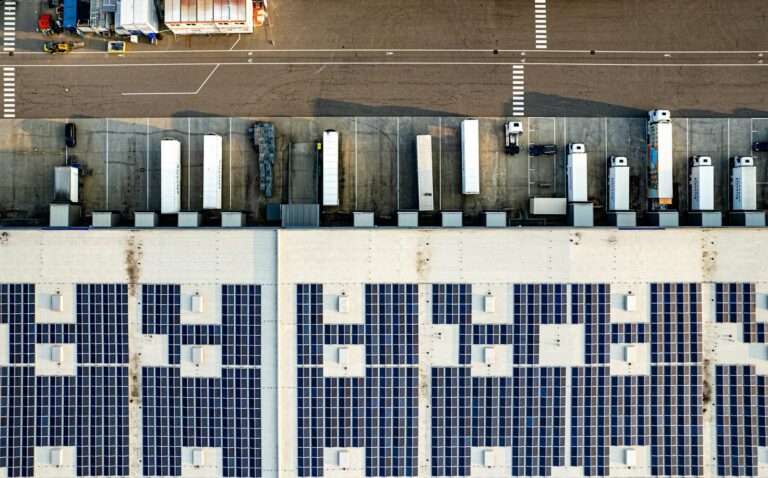
Before October 2022, rooftop solar on business and industrial buildings was limited to 50 square metres before planning permission was required. The Planning and Development (Solar Panels) Regulations 2022 (S.I. 493 of 2022) removed that cap for most sites. Announcing the change, the Government confirmed that industrial, business and agricultural buildings outside solar safeguarding zones can cover their entire roof with panels as exempted development, subject to conditions.
The regulations also extended exemptions for the first time to schools, health centres and hospitals, sports and recreation buildings, places of worship, community facilities, libraries and certain utility sites.
Book a free energy audit (worth €2,000). We review your bills, size the system and work out the SEAI business grant (about 45% until July 2027) and ACA tax savings.Book my free energy audit
Solar safeguarding zones and the 300 square metre limit
The main exception is the 43 solar safeguarding zones. These cover less than 3% of the country and sit mostly around airports, aerodromes and hospitals with helipads, where glint and glare could affect aviation.
Inside a safeguarding zone, the exempt rooftop limit for non-house buildings is 300 square metres of panels, including any panels already there. With modern panels, that usually equates to somewhere around 55 to 65kWp, depending on layout. Anything above that needs planning permission. Exempt installations in a safeguarding zone must also be notified to the local planning authority within four weeks of starting work.
A quick reference table
| Installation type | Outside safeguarding zone | Inside safeguarding zone |
|---|---|---|
| Rooftop on industrial, business or agricultural building | Whole roof, subject to conditions | Up to 300 m² per roof |
| Wall-mounted on industrial or agricultural building | Up to 75 m² | Up to 75 m² |
| Free-standing (ground-mounted) for non-house premises | Up to 75 m² total | Up to 75 m² total |
| Protected structure or Architectural Conservation Area | Only if character not materially affected | Only if character not materially affected |
These limits are separate. A farm with two sheds, for instance, could in principle have panels on both roofs plus a wall array and a small ground array, each counted against its own allowance.
The conditions that matter most for businesses
The industrial class carries 18 conditions and the business class 16. Most are technical and easily met by a competent installer. The ones that shape your design are:
- Mainly for your own use. For non-house buildings, the system must primarily supply electricity or heat used within the site. In practice that means more than half of what you generate should be consumed on site, which is also what gives you the best return.
- No hazardous glint or glare. Panels that cause hazardous glint or glare lose their exemption.
- Setbacks and projection. Panels must stay a set distance in from roof edges and within limits on how far they stand off the roof.
- Protected structures. If your building is a protected structure or in an Architectural Conservation Area, the exemption only applies where the works do not materially affect its character.
The full wording is in S.I. 493 of 2022 on the Irish Statute Book. We check every site against it at survey stage.
When you will need planning permission
- Rooftop arrays over 300 square metres inside a solar safeguarding zone.
- Ground-mounted arrays over 75 square metres, such as a larger field system on a farm or business park.
- Systems designed mainly to export, rather than serve the site.
- Works to a protected structure or in a conservation area that would affect its character.
- Solar carports, which are structures in their own right and should be checked case by case. See our solar carports page for more.
If you are unsure, the planning authority can give a formal ruling through a Section 5 declaration. Owners of protected structures can also seek a declaration under Section 57.
Planning is not the only approval
Exemption from planning does not remove other steps. Grid connection still goes through ESB Networks, with larger systems moving from mini-generation to small-scale generation above 50kW. If you are claiming the SEAI Non-Domestic Microgen grant, you must have a letter of offer before any work starts. Your insurer and, if you rent, your landlord will also want to know. Our SEAI grants guide explains the grant side, and the current 45% support rate makes it worth getting the order of steps right.
Frequently asked questions
How do I know if my premises is in a solar safeguarding zone?
The zones are mapped in S.I. 492 of 2022 and shown on local authority mapping. We confirm this for every site before we design anything.
Can I fill the roof and export most of the power?
Not as exempted development. The system must primarily serve your own site. If export is the main goal, you will likely need planning permission and a different grid process.
We lease our unit. Does that change anything?
Planning rules are the same, but you will need your landlord’s written consent, and it is worth agreeing who owns the system if the lease ends.
Do farm sheds count?
Yes. Agricultural structures have their own exemption class with similar rooftop rules, plus 75 square metres each for wall-mounted and free-standing arrays.
Let us check your site
We handle planning checks, grant applications and ESB Networks paperwork as part of every commercial job, anywhere in Ireland. Find out more about our commercial solar solutions, or contact us and we will tell you exactly what applies to your roof.
Thinking about your own system? See our commercial and farm solar or book a free survey with our SEAI-registered team.
Some links in this post are affiliate links. As an Amazon Associate we earn from qualifying purchases, at no extra cost to you.