KOSTAL Inverters in Ireland: Why This German Favourite Is Rarely Installed Here, and Why That Could Change
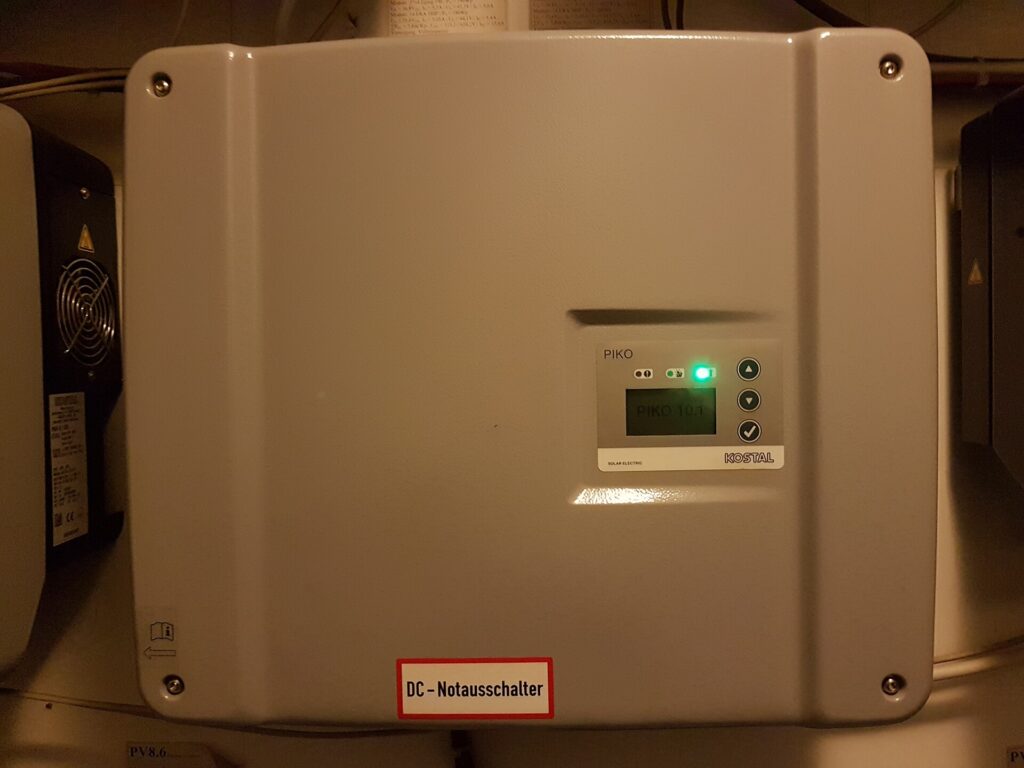
Quick answer: KOSTAL is a German inverter maker best known for its PLENTICORE hybrid range. It’s a household name in Germany but rarely installed in Ireland. That’s mainly down to history: its range was built around three-phase homes, and it has no strong Irish distribution or installer network. KOSTAL now makes single-phase PLENTICORE MP hybrids that suit Irish homes, so it could become a serious option here.
Ask a German homeowner which inverter is on their wall and there’s a good chance the answer is KOSTAL. Ask the same question in Ireland and most people won’t have heard of it. So why is a brand with a strong reputation across Germany and central Europe almost invisible here, and could that change?
Who is KOSTAL Solar Electric?
KOSTAL Solar Electric is the solar arm of the family-owned KOSTAL Group, a German engineering company that started out more than a century ago. According to German distributor Tritec, the group was founded more than 100 years ago as an automotive supplier of plugs and switches in Lüdenscheid, and it has sold inverters and storage under the KOSTAL Solar Electric name since 2006.
Today KOSTAL makes:
We supply and fit batteries and inverters across Ireland, with the €600 SEAI battery grant (5kWh or more) handled for you.Battery storage & the €600 grant
- PLENTICORE hybrid inverters, its flagship range, now in its third generation (G3).
- PIKO MP plus, a smaller single-phase inverter for compact systems.
- HELIVOR HV batteries, its own modular high-voltage storage.
- ENECTOR wallboxes for EV charging, plus energy meters and a free monitoring app.
KOSTAL is one of the few remaining German inverter makers, and “Made in Germany” is a big part of its pitch.
What makes the KOSTAL PLENTICORE so popular in Germany?
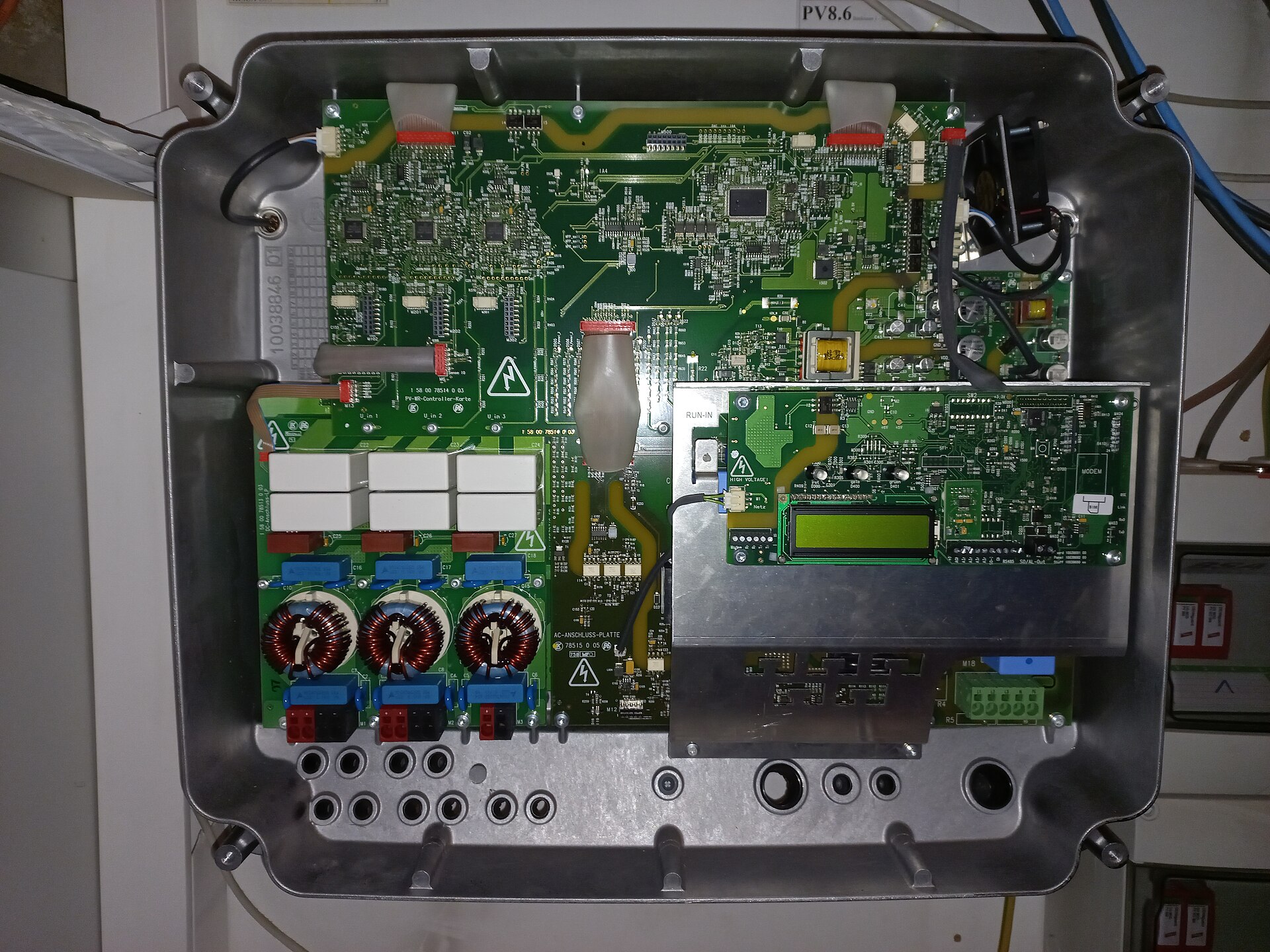
The PLENTICORE has built its reputation on efficiency, flexibility and build quality.
- High efficiency. KOSTAL’s datasheets quote a maximum efficiency of 98.03% to 98.21% across the PLENTICORE G3 range.
- Strong independent test results. In the 2026 storage inspection by HTW Berlin, a respected German university test, the PLENTICORE G3 paired with a BYD battery achieved efficiency class A, among the top performers.
- Battery when you want it. PLENTICORE inverters can run as standard solar inverters and be upgraded to hybrid operation later, so you can add a battery without changing the inverter.
- Built-in extras. Integrated shadow management, three MPP trackers on many models for complex roofs, and a backup power option with the KOSTAL BackUp Switch.
- Open communication. Modbus/SunSpec support makes it easy to link with smart home systems, heat pumps and dynamic tariff controls.
Why is KOSTAL rarely installed in Ireland?
1. Its range was built for three-phase homes
German and central European homes commonly have a three-phase electricity supply, and KOSTAL’s PLENTICORE range grew up serving that market. Most Irish homes, by contrast, are single-phase. ESB Networks’ simple “inform and fit” connection for home solar allows an inverter of up to 25A (approx. 6kVA) for single-phase and 16A per phase (approx. 11kVA) for three-phase. For years, the inverters Irish installers needed were single-phase units in the 3–6kW range, and that’s where KOSTAL’s line-up was thinnest.
2. No strong Irish distribution network
Irish installers mostly buy through a handful of local wholesalers, and the brands those wholesalers stock tend to dominate Irish quotes. KOSTAL’s main sales and support network is focused on mainland Europe. We couldn’t find a dedicated KOSTAL sales or support presence for the Irish market, which means less local stock, less training and fewer installers who know the product.
3. Price and familiarity
The Irish market grew quickly on competitively priced Chinese hybrid inverters, which are well stocked, well supported locally and familiar to installers. A premium German brand that’s harder to source is a tough sell when an installer already has a range they know and trust.
4. Irish grid settings and paperwork
Any inverter used in Ireland must meet ESB Networks’ connection requirements and be set up correctly for the Irish grid. Brands with an established Irish presence have already been through this many times, while installers trying a new brand have extra homework to do.
Does KOSTAL make a single-phase inverter for Irish homes?
Yes, and this is what could change things. KOSTAL now offers the PLENTICORE MP, a single-phase version of its flagship. KOSTAL’s own product pages list the PLENTICORE MP S at 3.6 to 4kW and the PLENTICORE MP M at 4.6 to 7kW. That covers the sizes most Irish homes need.
KOSTAL says the PLENTICORE MP brings all the advantages of the new PLENTICORE generation to a single-phase device, including integrated shadow management, free monitoring via its app, and a battery-backup function that works with the KOSTAL BackUp Switch to keep power on during an outage.
There’s also the smaller PIKO MP plus, a single-phase inverter from 1.5 to 4.6kW that can work as a solar, hybrid or battery inverter.
One thing to check: the larger MP M models go up to 7kW, but under ESB Networks’ rules a single-phase home system going through the standard NC6 route must stay within the roughly 6kVA inverter limit. An installer would need to pick a size, or settings, that fit the Irish rules.
Could KOSTAL succeed in the Irish market?
We think the potential is real. Here’s why:
- The single-phase gap is closing. With the PLENTICORE MP, KOSTAL finally has a product aimed at the type of home most Irish installers deal with every day.
- Three-phase is growing in Ireland too. Farms, businesses and larger homes with heat pumps or EV chargers increasingly have three-phase supplies. With a three-phase supply, ESB Networks allows up to about 11kVA under the simple connection route, which is exactly where KOSTAL’s PLENTICORE range is strongest.
- Batteries and backup are in demand. With winter blackout warnings and the SEAI battery grant, more Irish homeowners want a hybrid inverter that can add storage and backup power. That’s a PLENTICORE strength.
- European supply chains are under the spotlight. The EU has started restricting funding for projects using inverters from “high-risk” countries (see our piece on Huawei FusionSolar 9.0 and the EU inverter crackdown). A German-made inverter isn’t affected by those rules, which could make KOSTAL more attractive for commercial and farm projects that rely on EU-backed finance.
- Dynamic tariffs are coming. KOSTAL’s open communication and energy-management features suit homes that want to shift usage to cheaper times, a growing focus in Ireland.
What would need to change
For KOSTAL to take off in Ireland, it would need an Irish distributor stocking the range, training for local installers, Irish-based technical support and warranty handling, and competitive pricing against the brands already established here. Until then, KOSTAL will stay a niche choice.
Is KOSTAL worth it for an Irish home?
If you value German engineering, high efficiency and a strong independent test record, and you have an installer who can source and support it, KOSTAL is well worth considering, especially for three-phase homes, farms and businesses. For a standard single-phase home, the PLENTICORE MP is promising, but check local support, warranty process and pricing before you commit.
Compare it with the brands more widely installed in Ireland in our reviews of the Solis S6 hybrid inverter, GoodWe vs SAJ hybrids and the Sigenergy SigenStor Neo, and see our guide to solar battery storage.
Frequently asked questions
Where are KOSTAL inverters made?
KOSTAL Solar Electric is a German company and part of the KOSTAL Group, and it markets its inverters as “Made in Germany”.
Can I get a KOSTAL inverter installed in Ireland?
It’s possible, but few Irish installers offer KOSTAL because local stock and support are limited. Ask your installer whether they can source it and who handles warranty claims in Ireland.
Does KOSTAL have a single-phase hybrid inverter?
Yes. The PLENTICORE MP is single-phase, in sizes from 3.6kW to 7kW, with battery and backup options. The PIKO MP plus covers smaller single-phase systems from 1.5kW to 4.6kW.
Can a KOSTAL inverter qualify for the SEAI solar grant?
The SEAI grant depends on the system being installed by an SEAI-registered company and meeting the scheme’s technical requirements, rather than on the inverter brand. Confirm current rules with SEAI and your installer.
Is KOSTAL affected by the EU’s restrictions on Chinese inverters?
No. The EU’s funding restrictions target inverters from “high-risk” countries such as China. KOSTAL is a German manufacturer.
Thinking about a premium hybrid inverter?
Irish Wind & Solar can talk you through the options for single-phase and three-phase homes, farms and businesses, with full Safe Electric certification. Get a free quote.
Sources: KOSTAL Solar Electric, Tritec, reduco.ai (HTW Berlin 2026 results), ESB Networks, CRU.