AIKO NEOSTAR 3P54 Review: 500W Back-Contact Solar for Irish Homes
Every year the panel makers squeeze a bit more power out of the same size of glass, and the AIKO NEOSTAR 3P54 is one of the clearest examples we have seen. It is AIKO’s third-generation back-contact panel for homes, and the top model reaches 500W in a standard residential footprint of 1762 x 1134 mm. Even a couple of years ago that would have been unusual.
We have already reviewed the earlier AIKO Neostar 455W on this blog. The 3P54 is a newer, more powerful generation, so it deserves its own look. Below we go through what it is, how it should behave on an Irish roof, and who we think it suits.
What is the AIKO NEOSTAR 3P54?
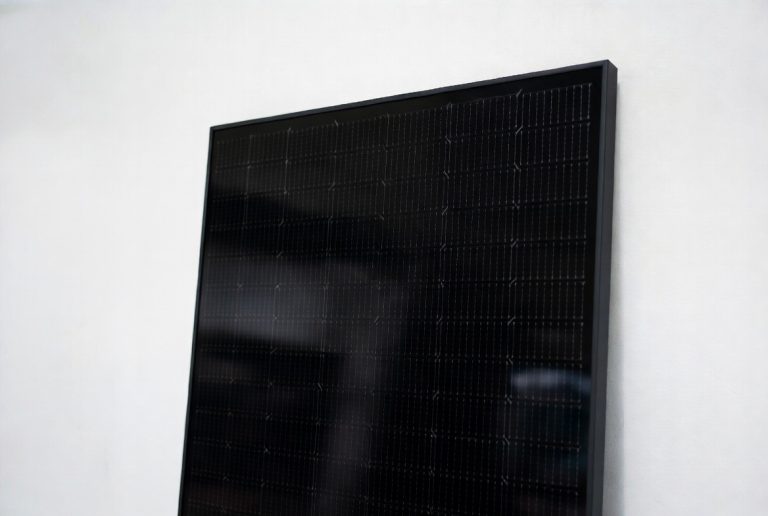
The 3P54 uses AIKO’s n-type ABC (All Back Contact) cells. On most panels you can see thin silver lines (busbars and fingers) running across the front of each cell. Those lines block a small amount of light. On a back-contact cell, all of the electrical contacts sit on the rear, so the whole front surface is free to catch light. That is a big part of why these panels get such high efficiency, and it also gives them a clean, uniform look on the roof.
The panel is sold as a mono-glass module (glass on the front, backsheet behind) in a range from roughly 470W to 500W, depending on the market. AIKO also makes a dual-glass version, the 3P+54, for buyers who prefer glass on both sides.
Free survey, grant check and a clear price with the grant already taken off.Check my savings
Key specifications
| Specification | AIKO NEOSTAR 3P54 (Mono-Glass) |
|---|---|
| Model family | AIKO-A-MCE54Mw |
| Power range | 470W to 500W (475W to 500W in some markets) |
| Module efficiency | Up to 25.0% |
| Cell technology | N-type ABC (All Back Contact), 108 cells |
| Dimensions | 1762 x 1134 x 30 mm |
| Weight | Approx. 20.6 kg |
| Temperature coefficient (Pmax) | -0.26%/°C |
| Product warranty | 15 years as standard, extendable to 25 years (varies by market) |
| Performance warranty | 30 years |
| Degradation | Max 1% in year one, then max 0.35% per year |
Specs are taken from AIKO’s official NEOSTAR 3P54 product page and published datasheet figures. Always check the datasheet for the exact model your installer is supplying, as warranty terms can differ between regions and distributors.
How it performs in Irish conditions
Ireland is not Spain. We get a lot of cloud, a lot of diffuse light and fairly mild temperatures. That changes which specs actually matter.
Diffuse light and dull days
On a grey day, light arrives from all over the sky rather than straight from the sun. A panel that converts a higher share of whatever light lands on it will simply produce more over the year, and the 3P54’s high efficiency helps here. Having no busbars on the front means no part of the cell surface is shaded by its own wiring, which is useful when light levels are low.
Temperature
A temperature coefficient of -0.26%/°C is very good, but to be honest it matters less here than in hot climates. Irish roofs rarely get hot enough for heat losses to be a major factor. Think of it as a bonus on the few warm, bright days in June and July rather than a headline reason to buy.
Shading
AIKO markets its ABC panels as handling partial shading better than conventional panels. Some industry commentators have questioned how big that benefit is in the real world, so we would not rely on it. If your roof has chimney or tree shading, we still design around it properly, whether that means careful string layout or adding optimisers.
Roof space
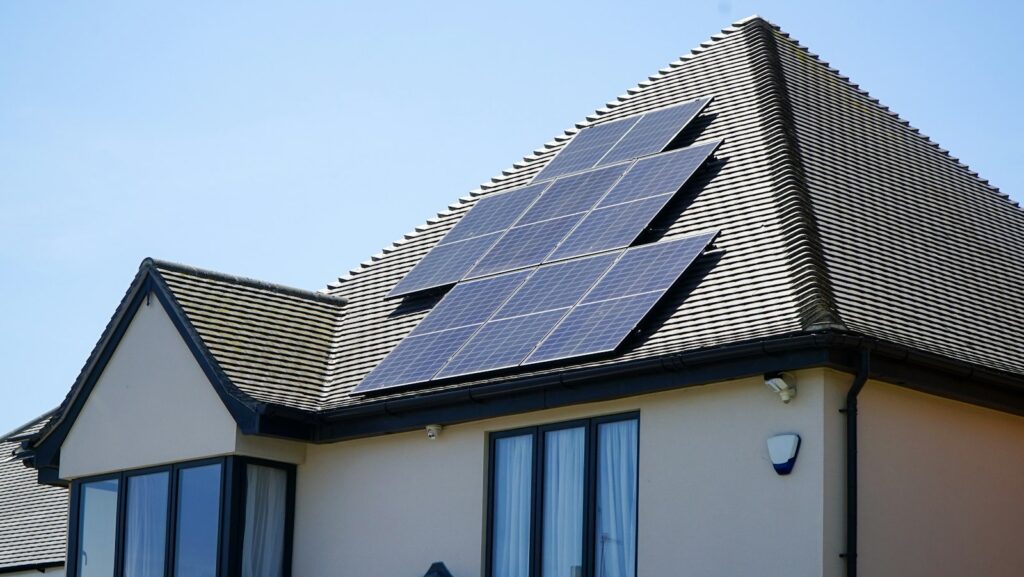
This is where the 3P54 earns its keep. Many Irish homes have a modest south, east or west roof face. With 500W panels, ten panels gives you about 5kWp, where older 400W panels would have needed more roof. On a smaller semi-detached roof, those extra watts per panel can be the difference between a system that is worth doing and one that is not.
Pros
- Very high efficiency for a home panel, up to 25.0%
- Up to 500W from a standard 1762 x 1134 mm size, so more power from a small roof
- Clean, even appearance with no visible front busbars
- Low degradation figures and a 30-year performance warranty
- Relatively light for its output at about 20.6 kg
Cons
- Usually priced at a premium compared with mainstream TOPCon panels
- Product warranty is 15 years as standard in some markets, so check whether the 25-year extension applies
- The shading claims are still debated, so do not buy it purely for that
- Higher-wattage panels draw more current, so the inverter needs to be matched carefully
Who is the AIKO NEOSTAR 3P54 best for?
We think it suits homeowners with limited roof space who want as much generation as possible, people who care about how the panels look on the house, and anyone planning a battery or EV charger who wants to maximise daytime generation. It also makes sense if you plan to stay in the home for the long term and want strong long-term output figures.
If you have a large, unshaded south-facing roof and plenty of room, a good TOPCon panel may give you similar total output for less money, simply by fitting an extra panel or two.
How it compares to alternatives
Against mainstream n-type TOPCon panels in the 450W to 490W range, the 3P54 offers more watts in the same size and a more uniform look, usually at a higher price per panel. Against other back-contact panels such as LONGi’s Hi-MO X10 range, it is in a similar class; the choice between them often comes down to supply, price and the warranty your installer can offer.
You can compare it with the other panels we have reviewed on our solar panel reviews page.
Pairing with inverters and batteries
The 3P54 works with the hybrid inverters we install most often. The key thing is that the inverter’s input current and voltage limits suit the panel. Because a 500W panel produces more current than an older 400W panel, we check this at design stage rather than assuming. If you want a battery, a hybrid inverter keeps things simple and lets you store midday generation for the evening.
SEAI grant eligibility
Using a premium panel does not affect your grant. For 2026, the SEAI Solar PV grant is capped at €1,800 for homeowners, with a further €600 available for a home battery. The main conditions are that your home was built and occupied before 2025 and that the work is done by an SEAI-registered installer, which we are. Full details are on the SEAI Solar Electricity Grant page, and we explain the process on our SEAI grants guide.
Frequently asked questions
Is a 500W panel too big for an Irish roof?
No. The 3P54 is the same physical size as many 430W to 455W panels at 1762 x 1134 mm. You simply get more power from the same space.
Do back-contact panels work well in cloudy weather?
They work well because of their high efficiency, which means more of the available light is converted. No panel produces much in heavy cloud, but higher efficiency helps over a full Irish year.
How much does an AIKO 3P54 system cost?
Prices vary by installer, roof type, system size and whether you add a battery. As a general rule, back-contact panels cost more than standard TOPCon panels. We give fixed quotes after a survey, so you know exactly where you stand.
What warranty will I actually get?
The performance warranty is 30 years. The product warranty is 15 years as standard in some markets and can be extended to 25 years. We confirm the exact terms for the stock we supply in your quote.
Thinking about the AIKO NEOSTAR 3P54 for your home?
If you want to know whether this panel suits your roof, Irish Wind & Solar can help. We are an SEAI-registered installer based in Waterford, and we cover all 26 counties. Have a look at our residential solar PV service, or get in touch for a free survey and an honest recommendation.
Thinking about your own system? See our home solar and battery systems or book a free survey with our SEAI-registered team.