Jinko Tiger Neo 3.0 Review Ireland (470W): Specs, Warranty and Verdict
Jinko’s 470W panel is turning up on more and more Irish quotes, usually as a step up from the familiar 455W. But “Jinko 470W” can mean two quite different panels, and the one you are most likely to be offered in late 2026 is the newer Tiger Neo 3.0 JKM470N-48QL6-DB, a full-black, glass-glass panel that Irish wholesaler Solarboss currently stocks (Solarboss listing).
So is it any good for an Irish roof? Yes. It squeezes 470W into the same 1762 x 1134 mm footprint as the Jinko 455, with a better temperature coefficient, a 25-year product warranty and a stronger power guarantee. The trade-offs are a heavier panel and a high operating current that some older inverters cannot fully use. Here is the detail.
Which Jinko 470W are we reviewing?
Jinko has sold a 470W panel before: the older Tiger Neo JKM470N-60HL4-(V), a larger 120-half-cell panel measuring 1903 x 1134 mm and weighing 24.2 kg, with 21.78% efficiency and a 12-year product warranty (Jinko 60HL4 datasheet). If your quote lists that model number, it is an older design.
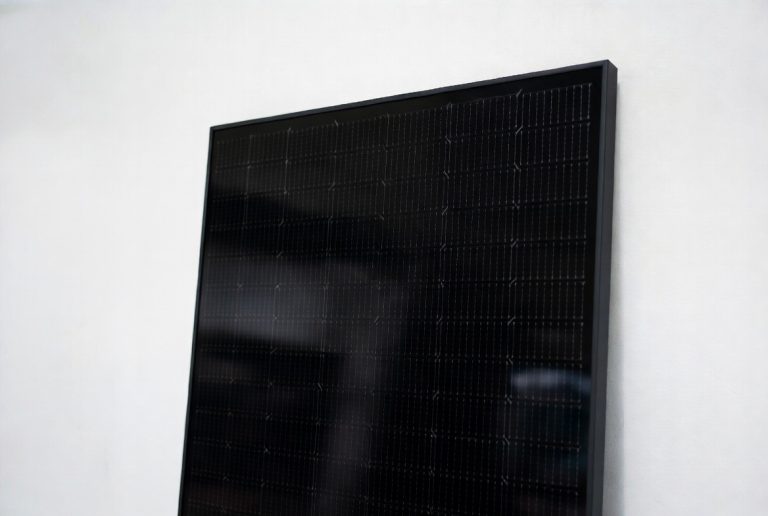
This review covers the current Tiger Neo 3.0 version, model JKM470N-48QL6-DB. Tiger Neo 3.0 is Jinko’s third-generation TOPCon platform, launched in 2025 (pv magazine). The “DB” version is the full-black, dual-glass variant aimed at rooftops.
Free survey, grant check and a clear price with the grant already taken off.Check my savings
Jinko Tiger Neo 3.0 470W: datasheet specs
Figures below are drawn from distributor spec listings that reproduce Jinko’s datasheet: Solarboss, SolarProof and IBC Solar.
| Spec | JKM470N-48QL6-DB |
|---|---|
| Rated power (STC) | 470 W (tolerance 0 to +3%) |
| Module efficiency | 23.5% |
| Vmp / Imp | 30.97 V / 15.18 A |
| Voc / Isc | 36.19 V / 15.8 A |
| Temperature coefficient (Pmax) | −0.26%/°C |
| Temperature coefficient (Voc) | −0.24%/°C |
| Cells | 192 quarter-cut N-type TOPCon |
| Construction | Glass-glass, full black, monofacial |
| Dimensions | 1762 x 1134 x 30 mm |
| Weight | approx. 24–24.4 kg |
| Design load (push / pull) | 4,000 Pa / 2,667 Pa |
| Max system voltage / series fuse | 1,500 V / 30 A |
| Product warranty | 25 years |
| Power warranty | 30 years: 99% in year 1, then about 0.35% per year |
The 465W sibling in the same series (JKM465N-48QL6-DB) lists 2 mm front and 2 mm rear glass and a guaranteed 88.85% of nominal power after 30 years (basic-solar.de listing), which matches the 99% then 0.35% per year schedule above.
Efficiency and temperature coefficient: what they mean in Ireland
At 23.5%, this panel is noticeably more efficient than the Jinko 455 it replaces on many quotes. In practical terms, it is the same size, so you get 15W more per panel. On a 12-panel roof that is 180W of extra peak capacity without needing any more space.
The temperature coefficient of −0.26%/°C tells you how much output drops as the panel heats above 25°C. Irish roofs rarely get as hot as Spanish ones, so this matters less here than spec sheets suggest, but it is still a small gain on bright summer days.
Jinko also claims its TOPCon panels generate more energy per watt than back-contact panels in low light, citing third-party field studies (pv magazine press release). That is the manufacturer’s claim rather than independent Irish data, so treat it as a point in its favour, not a guarantee.
Warranty: a clear step up
The warranty is one of the strongest arguments for the newer panel. The 25-year product warranty compares with 15 years on the Jinko 455 (JKM455N-54HL4R-V) and 12 years on the older 60-cell 470. The power guarantee is also better: about 0.35% per year after year one, against 0.4% per year on the 455 (Jinko 455 listing).
As always, check the warranty document that comes with your panels, since terms can vary by region and batch.
How it compares with the Jinko 455 and LONGi 470
We have already reviewed both of the panels it most often competes with: the Jinko 455W and the LONGi 470W.
| Spec | Jinko Tiger Neo 3.0 470W | Jinko Tiger Neo 455W (54HL4R-V) | LONGi Hi-MO X10 470W (LR7-54HVB) |
|---|---|---|---|
| Cell technology | N-type TOPCon | N-type TOPCon | N-type HPBC 2.0 back contact |
| Efficiency | 23.5% | 22.77% | 23.03% |
| Temp. coefficient (Pmax) | −0.26%/°C | −0.29%/°C | −0.26%/°C |
| Dimensions | 1762 x 1134 mm | 1762 x 1134 mm | 1800 x 1134 mm |
| Weight | approx. 24 kg | 21 kg | 21.6 kg |
| Construction | Glass-glass | Glass-backsheet | Glass-backsheet (per listing) |
| Isc | 15.8 A | 14.07 A | 14.93 A |
| Product / power warranty | 25 / 30 years | 15 / 30 years | Listings vary (15–30 years); 88% to 88.85% at 30 years |
Sources: Jinko 455 listing; LONGi figures from SolarTraders and Solarboss, with cell type from Alternergy. Note that LONGi product warranty figures differ between listings, so confirm yours in writing.
Against the Jinko 455, the 470 wins on efficiency, warranty and glass-glass construction, in the same footprint. It is about 3 kg heavier per panel, which your installer will factor in for handling and roof loading.
Against the LONGi 470, it is a closer call. Both have the same temperature coefficient. The Jinko is slightly smaller and more efficient on paper, while the LONGi’s back-contact design and shade-optimisation feature may suit roofs with partial shading. If your roof is clear, the Jinko’s warranty terms are the tie-breaker.
One thing to check: inverter current limits
With an Isc of 15.8 A and Imp of 15.18 A, this panel produces more current than many older designs. Some inverters cannot take all of it on one input. For example, the GoodWe EH series accepts 12.5 A per MPPT (GoodWe EH datasheet), while SAJ’s H2 accepts 16 A (SAJ H2 datasheet). On a 12.5 A input you would lose a little output in strong sun. A competent installer will pair this panel with a suitable inverter; if you are adding panels to an existing system, ask the question.
Reliability and the brand behind it
We cannot quote long-term field data for a panel launched in 2025. At brand level, Jinko says it was named a Top Performer in Kiwa PVEL’s 2025 PV Module Reliability Scorecard for the eleventh consecutive time, although the product named in that release was a different model (JinkoSolar press release).
Verdict
The Jinko Tiger Neo 3.0 470W is a strong all-round panel for Irish homes: more power from the same space as a 455, a full-black look, glass-glass build and a 25-year product warranty. Choose it if you want to get the most out of a limited roof without paying a premium-brand price. Make sure it is matched to an inverter that can handle its current, and if your roof has awkward shading, compare it with a back-contact option such as the LONGi or Aiko Neostar.
FAQs
Is the Jinko 470W worth it over the 455W?
Usually, yes, if the price gap is small. You get more power per panel in the same space, a longer product warranty and a better power guarantee.
Is the Jinko 470W bifacial?
No. The DB version is dual-glass but monofacial according to IBC Solar’s listing. On a pitched Irish roof, bifacial gains are minimal anyway.
Can I mix the 470W with my existing panels?
It is best not to mix different panels on the same string, because their voltage and current differ. A separate string or MPPT input is the usual solution. Ask your installer to check.
Does the panel choice affect the SEAI grant?
Check the current rules on our SEAI grants page. Your installer should confirm that the equipment on your quote meets the requirements at the time you apply.
See if it suits your roof
Every roof is different, and the best panel depends on space, shading and your inverter. Book a free survey and we will recommend a panel and inverter combination for your home. You can also browse our other solar panel reviews or read more about residential solar PV.
Related: compare the older Jinko 455W and the LONGi 460W, or see all our solar panel reviews.