Sigenergy vs Tesla Powerwall 3: Which Battery Wins in Ireland?
Short answer: there is no single winner. The Tesla Powerwall 3 wins on simplicity, a big 13.5 kWh block of storage and a stronger warranty for Irish customers. Sigenergy’s SigenStor wins on flexibility: you can start smaller, grow in steps, go three-phase, and even add DC EV charging. Which is better depends on your house, your phase supply and your plans.
As installers we fit both, along with Solis, GoodWe and SAJ. Here is how they compare on paper and in practice.
The two systems in a nutshell
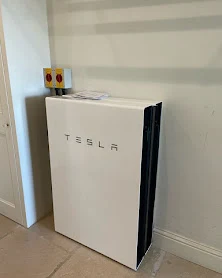
The Tesla Powerwall 3 is a single 13.5 kWh battery with a built-in solar inverter. You add capacity in 13.5 kWh blocks using Powerwall 3 Expansion units. Specs below come from Tesla’s Irish Powerwall 3 datasheet.
The Sigenergy SigenStor is a modular stack: an Energy Controller (hybrid inverter) plus one to six battery modules, with an optional DC EV charger module. Sigenergy specs come from distributor summaries by HCE and Heatable. For the newer SigenStor Neo, see our separate Neo post.
We supply and fit batteries and inverters across Ireland, with the €600 SEAI battery grant (5kWh or more) handled for you.Battery storage & the €600 grant
Head-to-head comparison table
| Sigenergy SigenStor | Tesla Powerwall 3 | |
|---|---|---|
| Battery capacity | Modules of 5.2, 5.84, 7.8 or 8.76 kWh usable | 13.5 kWh usable per unit |
| Maximum capacity | 1–6 modules per controller (about 52 kWh with six BAT 10.0) | Up to 81 kWh (multiple units plus Expansions) |
| Inverter power | 3–12 kW single-phase, 5–30 kW three-phase | 3.68 or 5 kW nominal per unit, up to 11.04 kW in a multi-unit system |
| Solar inputs | 2–4 MPPTs depending on controller | 3 MPPTs, up to 13 kW of solar |
| Phase | Single and three-phase | Single-phase (Irish datasheet) |
| Inverter efficiency | 97.6–98.0% max (single-phase) | 97.5% solar to home/grid; 89% solar to battery to home |
| Whole-home backup | Needs Sigen Energy Gateway | Needs Tesla Backup Gateway 2 |
| EV charging | Optional 12.5 or 25 kW DC module | Separate Tesla Wall Connector or other AC charger |
| Enclosure rating | IP66 | IP55 enclosure, IP67 battery and electronics |
| Weight | Per module, stackable | 130 kg per unit |
| Warranty | 10 years; capacity/throughput guarantee (check current document) | 10 years; 80% capacity at 10 years in Ireland |
| App | mySigen with AI tariff mode | Tesla app |
Capacity and scalability
This is where the two feel most different. Powerwall 3 comes in one size. If 13.5 kWh is right for you, great. If you only need 8 kWh, you are paying for capacity you may not use. If you need 20 kWh, you jump to 27 kWh with an Expansion.
SigenStor lets you build in smaller steps, for example one 8.76 kWh module now and another when an EV or heat pump arrives. For many Irish homes on a night-rate or smart tariff, that finer sizing makes the numbers work better. Our dynamic tariffs guide explains why sizing to your night-rate window matters.
Power and phase supply
A single Powerwall 3 delivers 5 kW continuous (or 3.68 kW, depending on the variant), which comfortably covers most homes but can be stretched by an electric shower plus cooker plus EV at once. Adding units raises it to 11.04 kW.
Sigenergy controllers go from 3 kW up to 12 kW single-phase, and up to 30 kW three-phase. If you are on a three-phase supply, such as many farms and small businesses, Sigenergy is the more natural fit, because the Irish Powerwall 3 datasheet is for single-phase systems.
Efficiency
Both are very efficient at sending solar straight to the house. Tesla quotes 97.5% solar-to-home/grid and 89% for the full solar-to-battery-to-home round trip in a typical use case. Sigenergy’s controllers list 97.6–98.0% maximum efficiency on single-phase models. The sources do not give a like-for-like round-trip figure for Sigenergy, so we would not pick between them on efficiency alone.
Backup during power cuts
Both need an extra gateway for automatic whole-home backup. Tesla uses the Backup Gateway 2, which detects an outage and isolates the house from the grid. Sigenergy uses the Sigen Energy Gateway, with 0 ms load-side switchover claimed under test conditions. The newer SigenStor Neo builds the backup switch into the controller, which simplifies things. For rural customers who lose power in storms, either will keep essentials running if sized properly. For short outages a portable power station can also be a low-cost backup.
Warranty
Tesla’s European Powerwall warranty gives Ireland 10 years with 80% capacity retention, and unlimited cycles when used for solar self-consumption, time-based control and backup. That is a strong warranty. Tesla does require an internet connection to honour the full term.
Sigenergy also gives 10 years on the battery and controller, with a retention guarantee or minimum throughput, whichever comes first. Published retention figures vary between sources (60–70%), and it also needs to stay online. On paper, Tesla’s warranty is stronger for Irish homes.
Apps and smart tariffs
Both apps are good. The Tesla app is clean and simple, and the warranty’s unlimited-cycle cover applies to its time-based control mode. The mySigen app goes deeper, with cell-level monitoring and an AI mode that uses tariffs, weather and solar forecasts to schedule charging. If you like to tinker or are on a dynamic tariff, mySigen gives you more to work with.
SEAI grant eligibility
Neither brand is excluded on paper. The SEAI solar electricity grant lists €900 per kWp for the first 2 kWp, an extra €300 per kWp up to 4 kWp when you add a battery (capped at €2,400 for the panels), plus a separate €600 battery grant. Budget measures that took effect on 6 October 2026 also extended solar grant eligibility to homes built and occupied before 2025, according to ESS News. SEAI does not publish a battery brand list on that page, so your installer should confirm your system meets current terms before any work starts. Full details are on our SEAI grants page.
Price
We have not found a reliable published installed price for either system in Ireland, and both vary with size, gateway and installation. Ask for a quote and compare like-for-like capacity.
Verdict by household type
| Household | Our pick | Why |
|---|---|---|
| Typical 3–4 bed single-phase home, one battery | Powerwall 3 | Simple, 13.5 kWh suits most usage, strong warranty |
| Smaller home or tight budget | Sigenergy | Start with one smaller module and add later |
| Three-phase home, farm or small business | Sigenergy | Controllers up to 30 kW three-phase |
| EV owner keen on solar charging | Sigenergy | Optional integrated DC charger |
| Wants maximum backup capacity | Either | Both scale well past 40 kWh |
| Wants the more established brand | Powerwall 3 | Sigenergy was only founded in 2022 |
For a deeper look at each, read our Tesla Powerwall review and our SigenStor review.
FAQ
Is Sigenergy as good as Tesla?
On features, yes, and in some areas more flexible. Tesla is the more established name and offers a stronger warranty retention figure for Ireland (80% at 10 years). Sigenergy was only founded in 2022.
Can Powerwall 3 work with my existing solar inverter?
Powerwall 3 has its own solar inverter built in (three MPPTs, up to 13 kW of solar), so on a new install it replaces a separate solar inverter. Whether it suits your existing setup depends on what you have, so we check that on survey.
Which is better for a three-phase house?
Sigenergy. Its three-phase controllers run from 5 to 30 kW, while the Irish Powerwall 3 datasheet covers single-phase.
Do both qualify for the €600 SEAI battery grant?
SEAI’s page does not name approved brands. Your installer should confirm eligibility for your specific installation before you start.
Get a straight answer for your home
We install both Sigenergy and Tesla Powerwall, so we will recommend whichever fits your home and budget. Book a free survey. For farms and businesses, ask about our free energy audit.
Thinking about your own system? See our home solar and battery systems or book a free survey with our SEAI-registered team.
Related: also compare the GoodWe ESA all-in-one.
Some links in this post are affiliate links. As an Amazon Associate we earn from qualifying purchases, at no extra cost to you.