Could AI-Powered Wind Turbines Transform Renewable Energy in Ireland?
Renewable energy harnessed from solar power offers a sustainable and eco-friendly solution to meet the worlds.
Could AI-Powered Wind Turbines Transform Renewable Energy in Ireland?

Why Irish Wind & Solar Is Watching GEVI Wind Closely
Ireland has some of the strongest and most consistent wind resources in Europe. From the Atlantic coastline to inland agricultural regions, wind has become a cornerstone of Ireland’s renewable energy transition.
But while large wind farms dominate Ireland’s renewable landscape, a new category of smart small-scale wind turbines is beginning to emerge.
At Irish Wind & Solar, we believe that innovative technologies like those developed by GEVI Wind could play a major role in the future of distributed renewable energy across Ireland.
With AI-powered vertical wind turbines designed for homes, farms, and businesses, GEVI’s technology may represent a significant shift in how wind energy is deployed.
Wind energy Ireland renewable power
Ireland’s Wind Energy Advantage
Ireland is naturally suited to wind energy.
The country benefits from:
- Strong Atlantic wind patterns
- Large rural areas with high exposure
- Increasing electricity demand
- Government renewable energy targets
- A growing interest in energy independence
Wind power already produces a large percentage of Ireland’s electricity, but the next stage of the energy transition will likely involve smaller distributed renewable systems.
These systems allow homeowners, farms, and businesses to generate power directly on-site.
This is where small wind turbine technology could play an important role.
The Problem With Traditional Small Wind Turbines
Small wind turbines have existed for years, but many systems on the market have struggled with reliability and efficiency.
Common issues include:
- Poor performance in turbulent wind
- Mechanical wear from constant directional changes
- Noise and vibration issues
- Complex installation requirements
Many inexpensive turbines sold online often fail within a short time because they are not designed for real-world wind conditions.
At Irish Wind & Solar, we often explain to customers that not all turbines are created equal.
A New Approach: AI-Controlled Vertical Axis Turbines
Unlike traditional wind turbines that must face into the wind, vertical axis wind turbines rotate around a central vertical shaft.
This design allows them to capture wind from any direction, making them far more adaptable to changing wind conditions.
However, earlier versions of vertical turbines often lacked efficiency.
This is where artificial intelligence and real-time optimisation are beginning to transform the technology.
Why GEVI Wind Technology Is So Interesting
One company pushing the boundaries of turbine innovation is GEVI Wind.
Their turbines combine vertical axis design with AI-powered blade control, allowing the system to continuously adapt to changing wind conditions.
Instead of operating at a fixed blade angle, the turbine adjusts itself based on real-time wind data.
This allows it to:
- capture more energy
- reduce mechanical stress
- operate more efficiently in turbulent wind
According to the technology information provided by GEVI Wind, their AI optimisation system can increase energy production by up to 60% compared to traditional vertical turbines.
You can explore their technology here:
Suggested backlink anchor:
AI wind turbine technology → https://www.geviwind.com/
Lorem Ipsum has been the industry’s standard dummy text ever since the 1500s.
Key Features of the GEVI Wind Turbine
AI Adaptive Blade Control
The system automatically adjusts blade angles to maximise wind capture and reduce structural stress.
Quiet Operation
The turbines operate at under 38 decibels, making them suitable for residential and urban environments.
Rapid Installation
The turbines can reportedly be installed in as little as six hours, dramatically reducing installation complexity.
Storm Protection
During high winds or storms, the turbine automatically aligns blades to reduce stress and protect the system.
Smart Monitoring
Each turbine includes digital monitoring and predictive maintenance technology.
Why This Could Work Well in Ireland
Ireland’s wind environment is extremely dynamic.
While coastal areas have strong steady winds, many inland locations experience turbulent wind flows caused by buildings, trees, and terrain.
Traditional horizontal turbines struggle in these conditions.
Vertical turbines with AI optimisation could potentially perform far better because they:
- capture wind from all directions
- adapt to turbulence
- maintain efficiency in variable conditions
This could make them ideal for farms, commercial buildings, and hybrid solar installations.
The Rise of Hybrid Solar + Wind Systems
One of the most exciting renewable energy developments is the combination of solar and wind generation.
These technologies complement each other perfectly.
Solar produces most energy during daylight hours, while wind often produces more electricity during night-time and winter months.
By combining both technologies, systems can deliver much more consistent renewable generation.
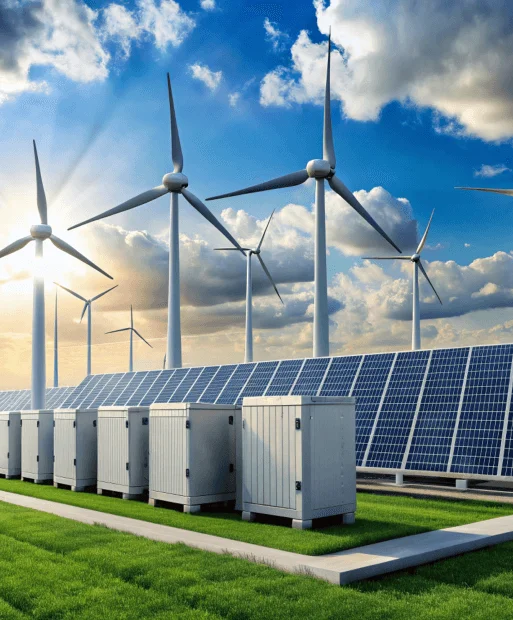
At Irish Wind & Solar we frequently design hybrid renewable energy systems that combine:
- Solar PV panels
- Battery storage
- Smart energy management
- Wind generation
This approach increases energy independence and reduces reliance on grid electricity.
Suggested internal link:
Solar PV installations in Ireland → https://irishwind.ie
Distributed Renewable Energy: The Future of Power
Large wind farms will continue to play a major role in Ireland’s energy mix.
But the future will also involve distributed generation, where thousands of smaller renewable systems produce power locally.
Benefits include:
- reduced grid strain
- improved energy resilience
- lower transmission losses
- greater energy independence for homeowners and businesses
Small intelligent wind turbines could become an important part of this ecosystem.
Could GEVI Wind Dominate the Irish Market?
While the technology is still emerging, AI-powered vertical wind turbines could represent a major shift in the small-scale wind industry.
If the performance claims and efficiency gains prove successful at scale, systems like these could become highly attractive for:
- farms
- commercial properties
- warehouses
- rural homes
- off-grid installations
At Irish Wind & Solar, we are always watching emerging renewable technologies that could help accelerate Ireland’s transition to clean energy.
GEVI Wind’s approach to combining AI, adaptive turbine design, and distributed energy systems is certainly one of the most interesting developments in the sector.
Final Thoughts
Ireland’s renewable energy future will not rely on a single technology.
Instead, it will likely involve a combination of:
- solar power
- wind energy
- battery storage
- smart energy management systems
The next generation of wind turbines will need to be smarter, quieter, easier to install, and capable of operating efficiently in complex wind conditions.
Technologies like those being developed by GEVI Wind could help unlock new possibilities for wind energy across Ireland.
At Irish Wind & Solar, we believe innovations like this could play an important role in the future of distributed renewable energy.


Jeff